The essentials
- Shakespeare's Hamlet drew from a Danish legend centuries older. The historical Amleth was a Viking-age prince whose story survived in medieval chronicles before the Bard reimagined it.
- No evidence places Shakespeare at Kronborg itself, yet his precise details about the castle suggest he consulted travelers' accounts or knew those who had journeyed to Denmark.
- The 1603 publication of Hamlet made Kronborg legendary. Centuries later, the fortress became synonymous with the play, drawing literary pilgrims seeking the ghost's ramparts and Ophelia's tower.
- Walk the battlements where sentries spotted the ghost. Visit chambers that inspired the play's settings. The castle's architecture echoes moments from every act of the tragedy.
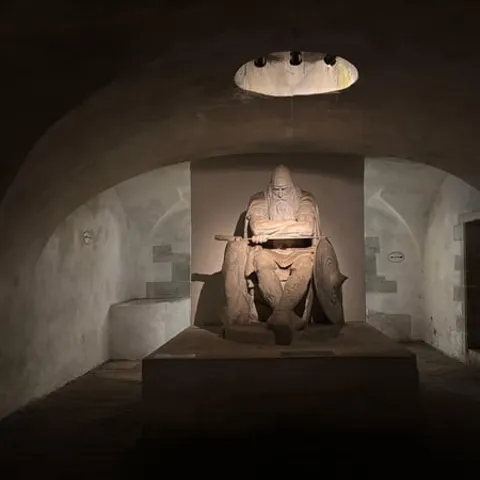
- Legend holds that a sleeping Viking hero lies in the castle's casemates, destined to wake when Denmark faces its darkest hour. Visitors still descend to see where the myth endures.
- Top choice Four sites in one day from US$213 Reaches ElsinoreYes, guidedOther castlesFrederiksborg and RoskildeCourtyard and rampartsCovered Check availability
- Easy-pace castles day from US$154 Reaches ElsinoreYes, guidedOther castlesFrederiksborgCourtyard and rampartsCovered See this tour
- Kronborg entry ticket from US$23 Reaches ElsinoreYes, on your ownOther castlesNoneCourtyard and rampartsCovered See this tour
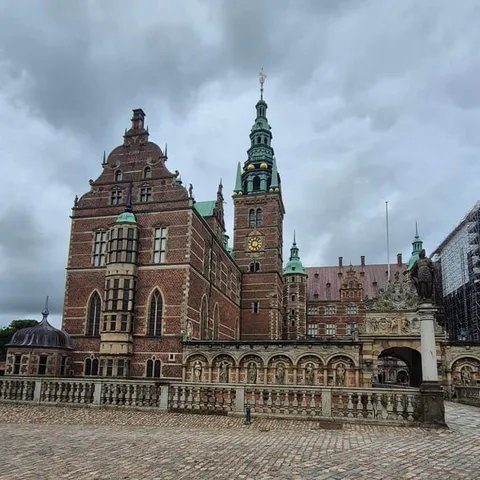
Internationally, the castle is best known as Elsinore, the legendary setting of Shakespeare's Hamlet.
Standing in the real Elsinore
Visiting Elsinore
- Adult admission 150 DKK, or 135 DKK booked online
- Open every day 10:00 to 17:00 from 28 March to 31 October
- Guided at Kronborg on both guided day tours
- Under 18 enters free
What the name carries
- UNESCO World Heritage since 2000
- Known internationally as Elsinore, the setting of Hamlet
- Built to command the Sound, not to house a play
- Holger the Dane rests in the casemates below
Shakespeare's Danish Prince and a Real Fortress
When William Shakespeare wrote Hamlet around 1600, he set his tragedy of a troubled prince in Denmark. But Shakespeare did not invent the story from thin air. The playwright drew on a legend that had circulated across Europe for centuries, tracing back to Saxo Grammaticus, a 12th-century Danish historian who recorded the tale of Amleth, a legendary prince whose uncle murdered his father and seized the throne. Saxo's Amleth survived by feigning madness, then avenged his father's death. The story passed through French retellings and reached England just as Shakespeare was writing his masterpieces. In transforming Amleth into Hamlet, Shakespeare chose to anchor the drama in a specific real location: Kronborg Castle, the fortress that guards the strait between Denmark and Sweden.
The choice was neither random nor obscure. By the 1590s, English travellers and merchants who passed through the Danish sound knew Kronborg well. They saw it rising from its stone platform on the island of Hveen, formidable and famous. For Shakespeare's audiences, setting a play in this actual Danish castle lent weight and authenticity to the prince's dilemma. The real fortress gave the invented tragedy a grounding in geography and fact. Today, visiting Kronborg allows you to walk the same ramparts and rooms that inspired one of literature's greatest works and to trace how a medieval legend became an immortal play.
The Legend Before the Play
The character of Hamlet Castle in Denmark's cultural memory begins with Saxo Grammaticus. Writing in Latin in the 12th century, Saxo recorded the exploits of Amleth, a Danish prince whose father was murdered by his own brother. The uncle, Feng, married Amleth's mother Gerutha, just as Claudius marries Gertrude in the play. Amleth feigned insanity to conceal his knowledge of the crime, speaking only in riddles and seemingly harmless words. When his uncle grew suspicious, Amleth was sent away but returned to set fire to the hall and kill Feng in revenge. Saxo's tale appeared in his Gesta Danorum, a history that circulated among educated Europeans and eventually reached England.
In 1582, a French author named François de Belleforest retold Saxo's story in his Histoires Tragiques, embellishing it with more courtly detail and psychological depth. Belleforest's version became the most popular Amleth tale in Western Europe and was likely the version Shakespeare knew. The transformation from historical chronicle to literary fiction took nearly five centuries, moving from Saxo's spare Nordic account through French elaboration to Shakespeare's psychological masterpiece. Each retelling added layers of complexity to the prince's madness, his moral struggle, and his slow path toward revenge. When you visit Kronborg, you are standing in the setting where this legendary prince is said to have lived, and where Shakespeare's imagination placed his greatest tragic hero.
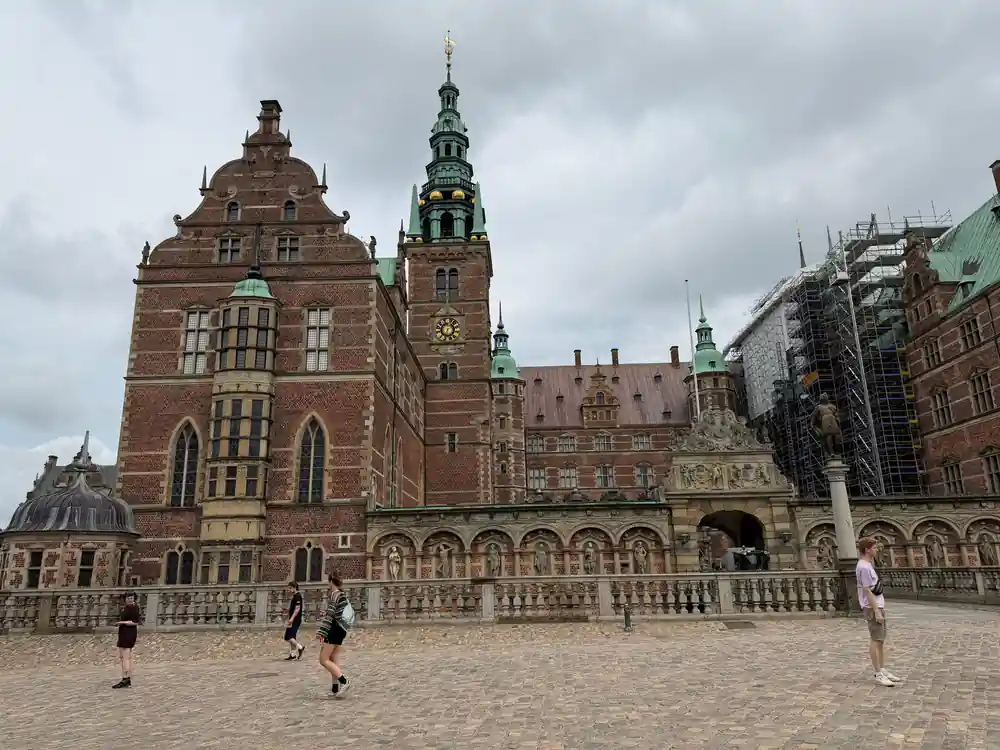
Where Hamlet's father's ghost walks these stone halls
Kronborg: The Fortress That Inspired a Masterpiece
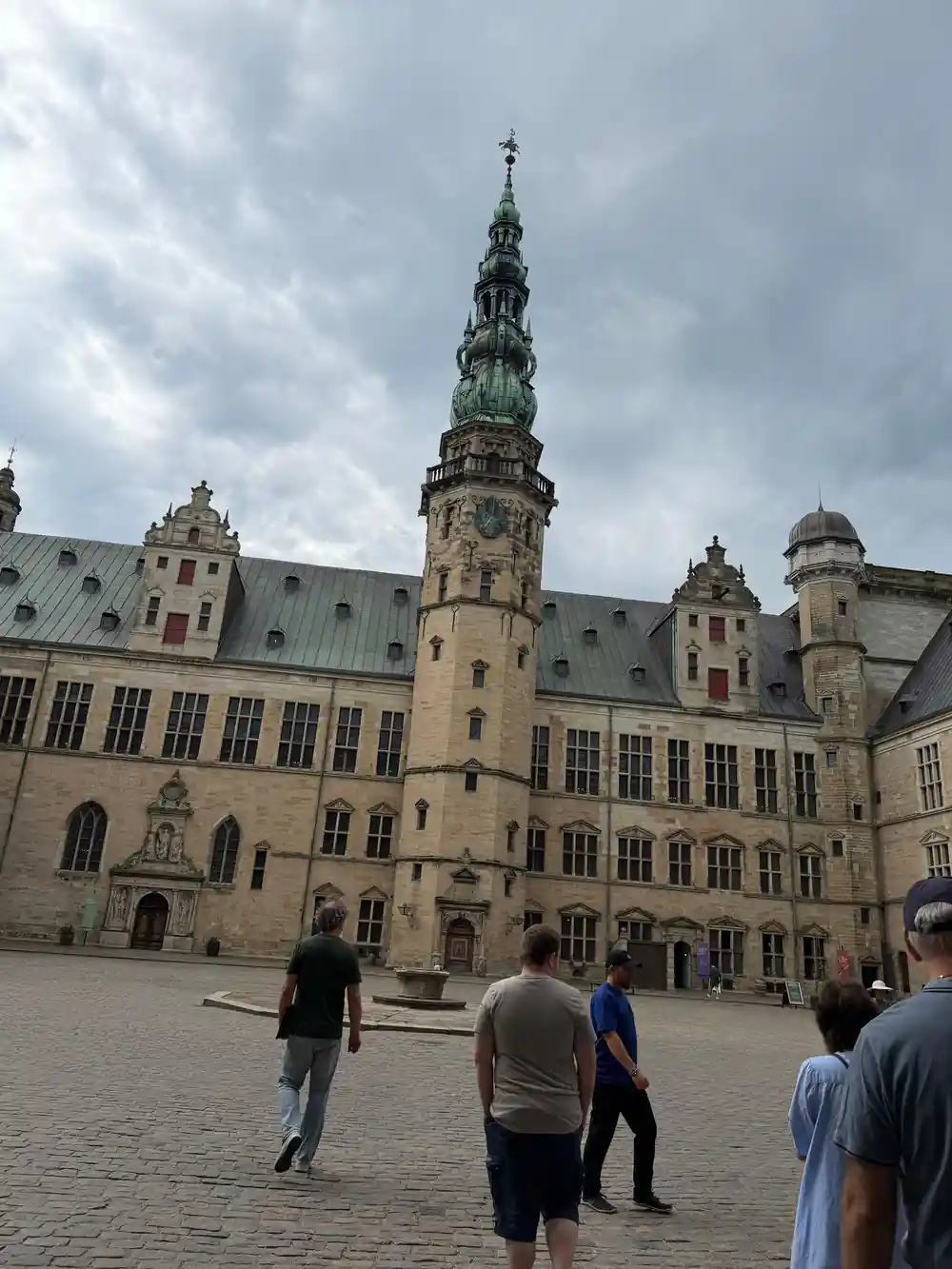
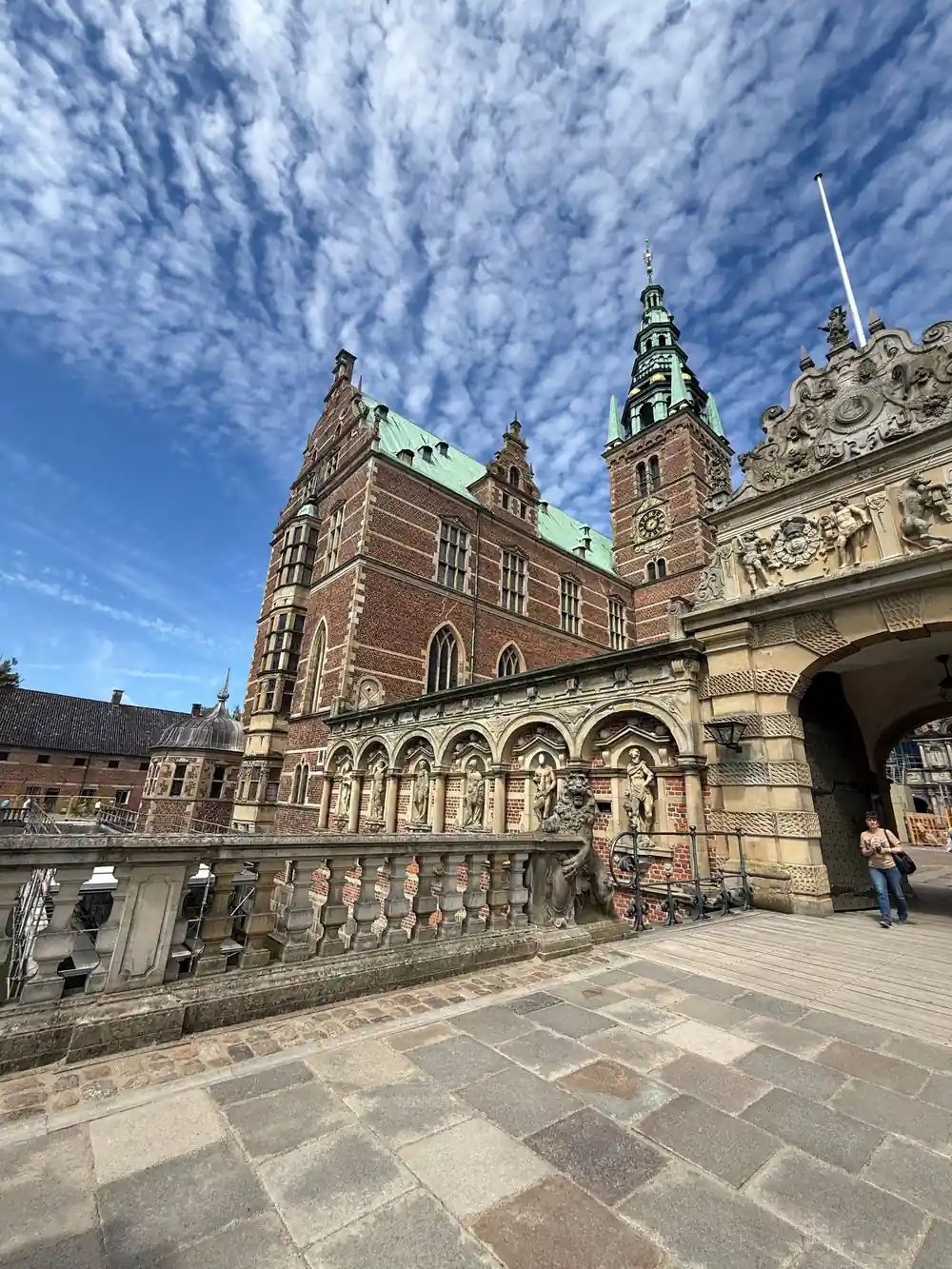
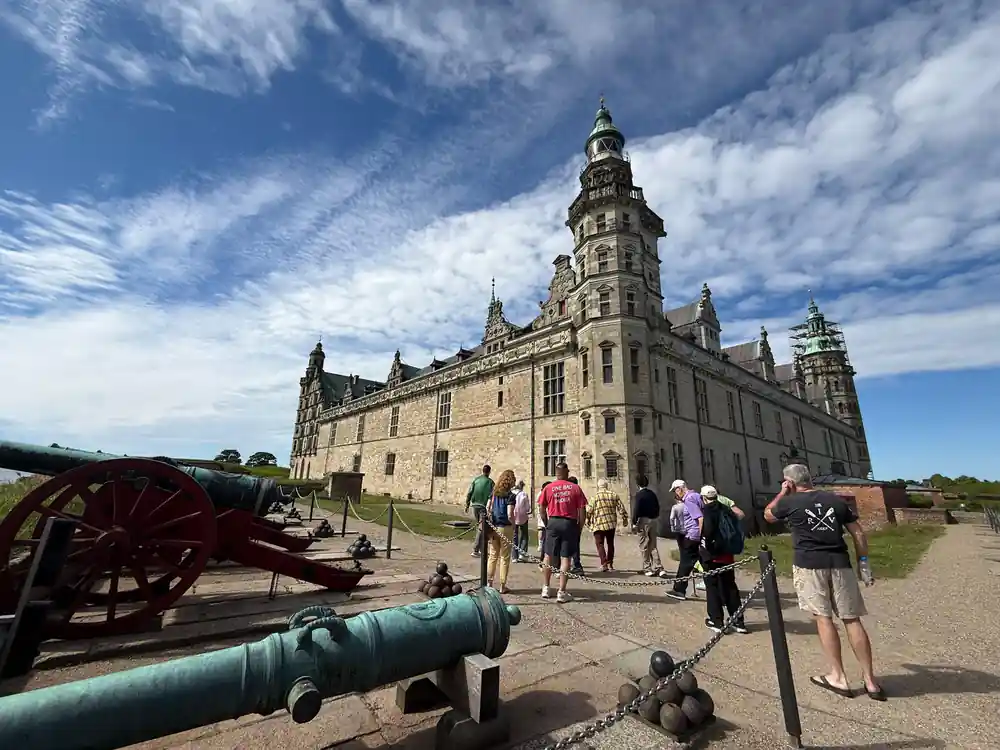
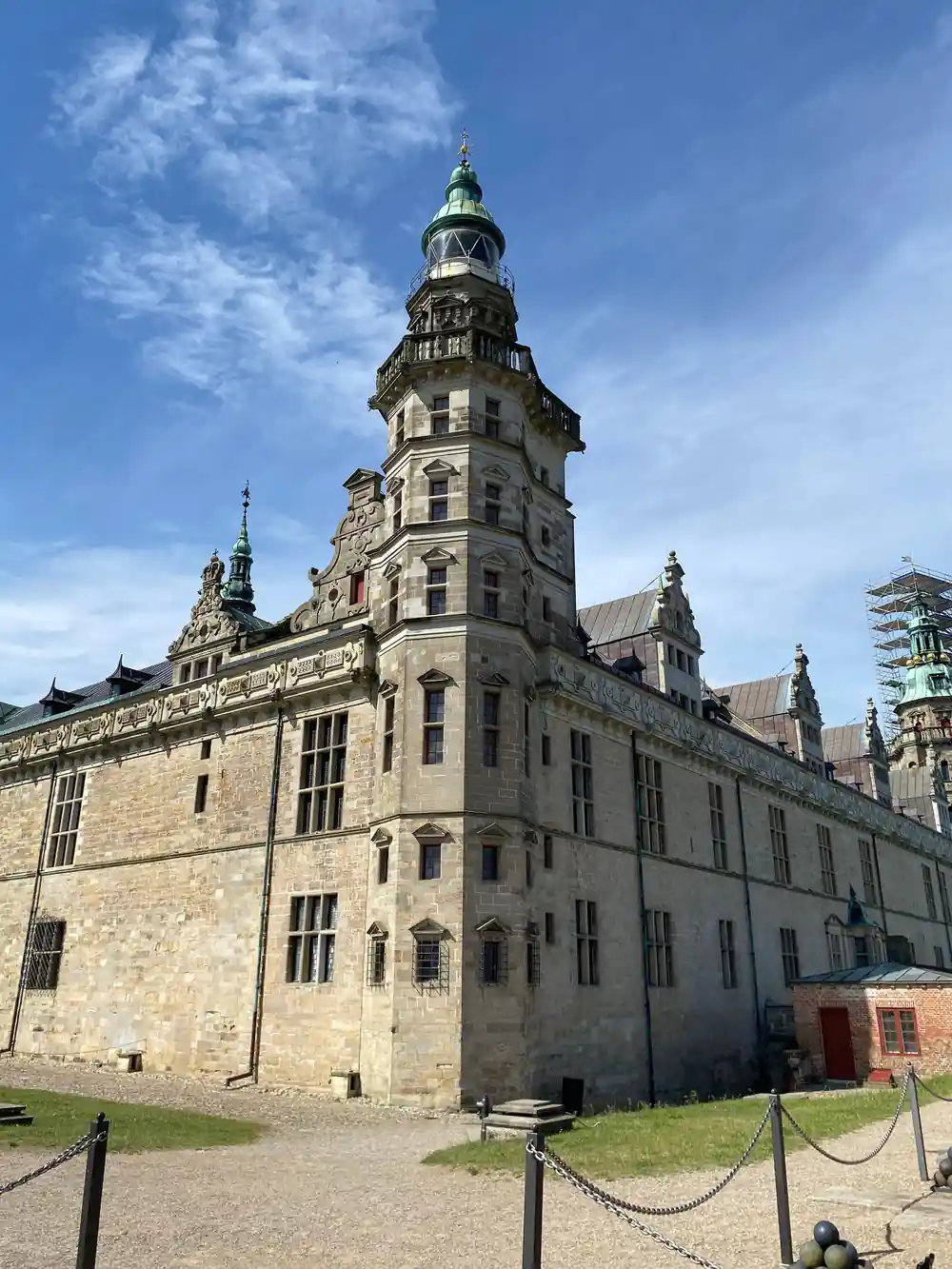
Kronborg Castle sits on the northern tip of the Danish island of Amager, at the narrowest point of the Øresund Strait. Built in the late 16th century on the site of earlier medieval fortifications, Kronborg was one of the most impressive strongholds in Northern Europe. Its massive ramparts, bastions, and gun emplacements made it a symbol of Danish power and control over the passage between the Baltic and the North Sea. Every merchant ship travelling between Sweden and the wider world had to pass Kronborg and pay toll to the Danish crown. The castle combined military function with royal residence, housing the Danish court in its apartments and halls. By the time Shakespeare was writing, Kronborg was already legendary in England and the rest of Europe.
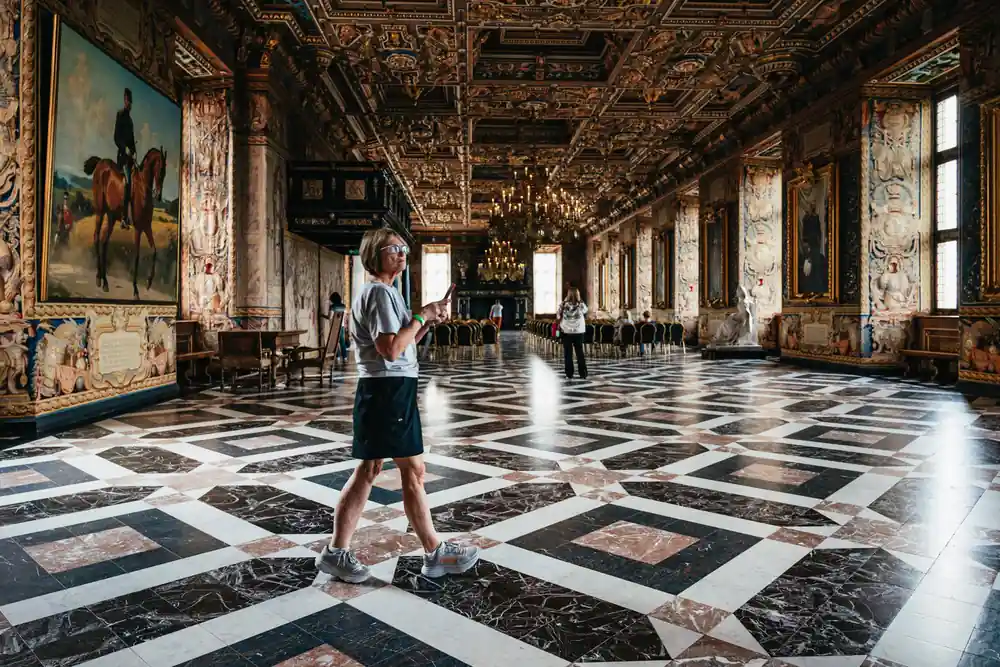
The fortress draws visitors into a world of stone corridors, echoing chambers, and windows that command views across the water to Sweden. The Great Hall, one of Kronborg's most impressive rooms, stretches across the castle's heart and once hosted royal banquets and ceremonies. The ramparts circle the fortress and offer sight lines in every direction, designed to spot approaching enemies. Below, the casemates tunnel through the fortress foundation, a network of gun positions and storage rooms that housed the artillery crew. These real architectural features give Hamlet Castle its physical presence. Walking through these spaces, you inhabit the setting that Shakespeare used for his play, seeing where a prince might pace in madness or where a ghost might appear on the ramparts at night.
The Scenes You Can Still Stand In
Shakespeare's Hamlet opens on the ramparts of Elsinore, where guards encounter the ghost of Hamlet's father. In the play, this ghost walks the castle at night, revealing to his son the secret of his murder. When you climb to Kronborg's ramparts, you stand where this supernatural encounter is imagined to unfold. The walls stretch toward the horizon, and the darkness can feel thick in evening hours. The battlements are narrow, the wind cuts across the stone, and the sense of isolation is real. A soldier on watch here in earlier centuries would have felt the weight of the castle's responsibility and the exposure of its position.
The Great Hall is the setting for the play's final tragic scene, where Hamlet and Laertes duel and where Claudius's treachery is exposed. In reality, the hall hosted royal ceremonies and feasts, but Shakespeare transforms it into an arena of violence and revelation. The hall you enter today is the same room in its essential form, though it has been restored and altered over the centuries. Smaller chambers throughout the castle could serve for the private scenes where Hamlet confronts his mother, where he learns of his father's death, and where he struggles with madness and revenge. The casemates below, with their low ceilings and confined spaces, evoke the weight and darkness of the castle's hidden life, the secrets buried in its depths.
400
Hamlet has graced Kronborg's courtyard stage for over 400 years, making it theatre's most storied castle.
Holger Danske: The Sleeping Legend
Deep in the casemates of Kronborg Castle, in a vaulted chamber beneath the fortress floor, a colossal statue depicts a figure in armour sitting on a stone throne. This is Holger Danske, a legendary Danish warrior and folk hero. According to Danish tradition, Holger Danske is not dead but merely sleeping, waiting in the casemates for the day when Denmark faces its greatest danger. On that day, he will wake and rise to defend his nation. The statue, carved by sculptor Theobald Chartran in the 1880s, shows him muscular and imposing, his sword resting across his knees, his face thoughtful and resolute.
The legend of Holger Danske has roots in medieval European tradition, but it was woven into Danish national identity over centuries. The casemates themselves were designed for military purposes, to house cannon and crews during times of siege, but they also became spaces of mystery and folklore. Visiting the casemates of Kronborg, you descend into the fortress's deepest level, into chambers where echoes are magnified and light is dim. The statue of Holger Danske sits in its eternal vigil, a reminder that castles are not merely military structures but repositories of national legend and collective memory. The sleeping warrior adds a layer of myth to Kronborg, a story older than Shakespeare's but resonant with similar themes of duty, waiting, and protection.
Did Shakespeare Ever Visit This Castle in Denmark?
There is no historical evidence that Shakespeare travelled to Denmark or stood in Kronborg Castle himself. Shakespeare was a working playwright and actor in London, tied to the Globe Theatre and the demands of his company. International travel was expensive, difficult, and rare for theatre professionals in that era. What Shakespeare did have access to were the written accounts of English merchants and diplomats who had visited Denmark, accounts of the castle's appearance and significance, and the literary versions of the Amleth tale that circulated in printed form. He combined these sources, his imagination, and his knowledge of dramatic structure to create a play set in a real location he likely never visited.
This gap between Shakespeare's imagination and actual experience raises a fascinating question. How accurately did he envision Kronborg? The answer is that it matters less than one might think. Shakespeare captured something true about the castle's essence and function: it is a place of power, isolation, and secrets. Whether he imagined the ramparts correctly or the Great Hall precisely as it exists matters far less than the fact that when you visit Kronborg today and read Hamlet, the geography suddenly makes emotional sense. The castle in the play and the castle in reality align, not necessarily in every detail but in mood and meaning. That alignment is part of why Hamlet Castle remains so compelling to readers and visitors four centuries after the play's first performance.
Every way to reach Elsinore, priced
Every figure is a "from" price. The private tour is priced for the whole group, not per person.
From Legend to Stage: Hamlet at Kronborg Today
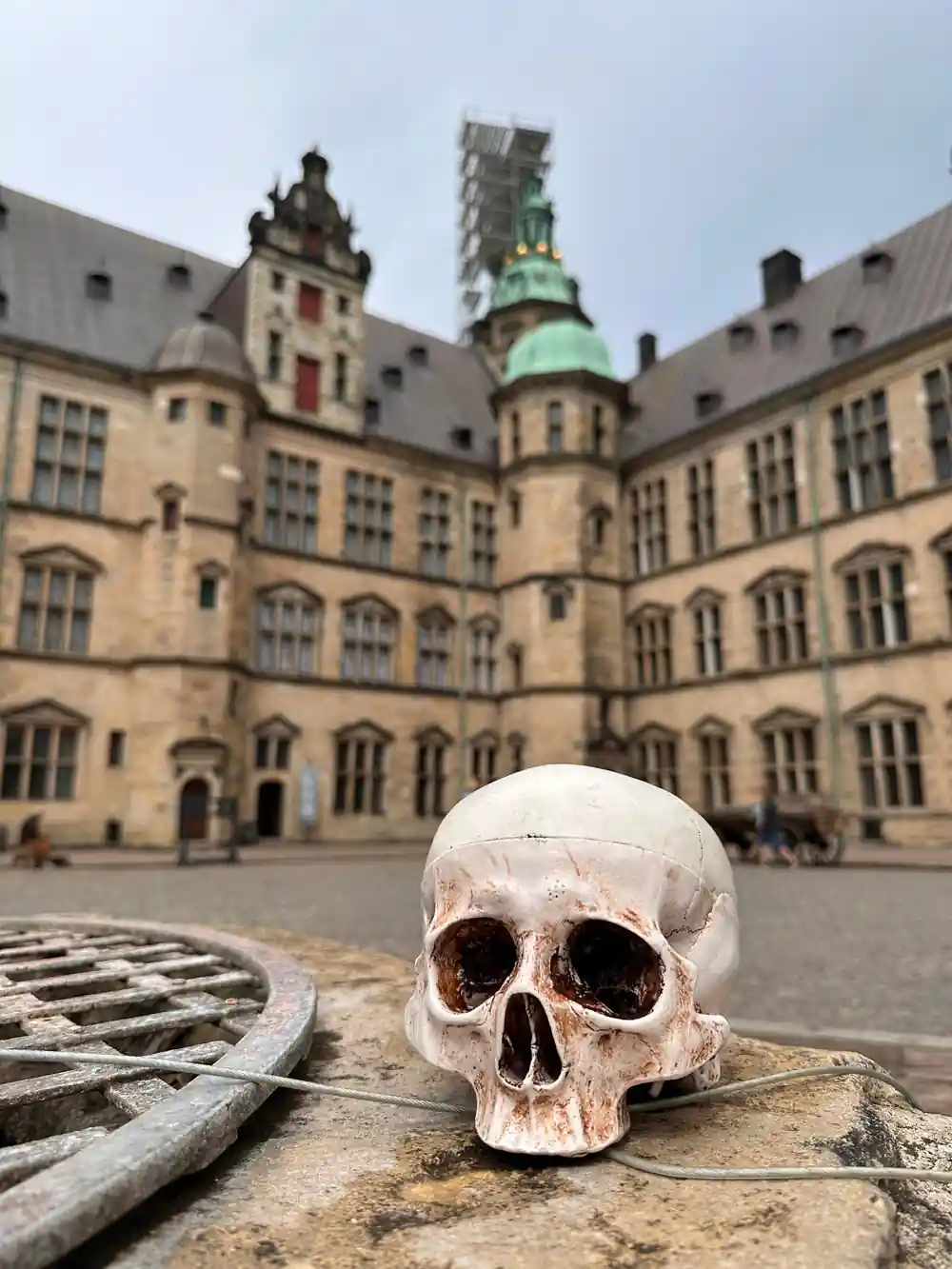
Kronborg Castle is no longer a working military fortress or royal residence in the way it was in Shakespeare's era. Today it functions as a museum and a cultural monument, and it has also become a stage. Over the decades, theatrical companies have performed Hamlet within the castle itself, most famously including a legendary production in 1937. There is something about performing the play in the actual location that inspired it that transforms the experience. Actors stand on the real ramparts where the ghost of Hamlet's father is said to walk. The Great Hall echoes with words Shakespeare wrote about its fictional version. The line between history and fiction, between the real castle and the imagined setting, becomes blurred and permeable.
Visitors to Kronborg today are encouraged to explore the castle with the play in mind, to trace the scenes and settings that Shakespeare drew upon. This approach to cultural tourism treats Kronborg not merely as a historical artefact but as a living connection between literature and place. Museum guides often reference the play as you move through the rooms. Exhibits explore the relationship between the historical fortress and its literary fame. You can purchase editions of Hamlet at the castle shop and read passages in the actual settings they describe. This integration of literature and location makes Kronborg one of the few castles in the world where you can simultaneously experience medieval military architecture, royal history, and one of literature's greatest works, all in one visit.
Hamlet's castle, priced three ways
Every figure is a "from" price. Under 18 enters Kronborg free.
The castle behind the play
Why here, of all castles
The narrowest crossing
Kronborg commands the strait between Denmark and Sweden at its tightest point.
A name that travelled
Internationally the castle is known as Elsinore, the setting of Hamlet.
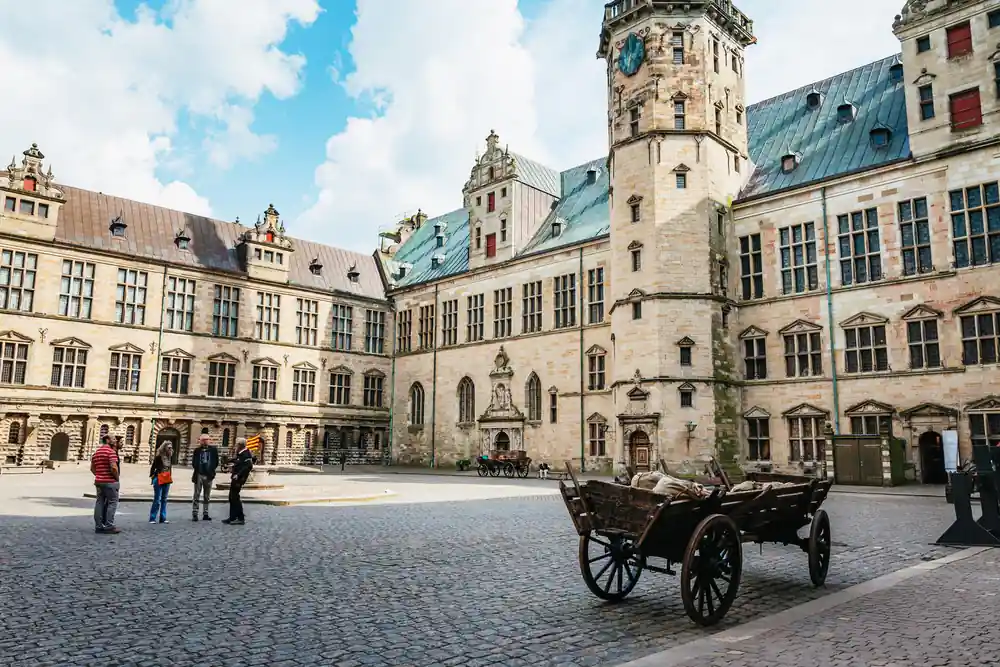
The courtyard
The enclosed courtyard is the space the play is most often staged in.
Below the floor
Holger the Dane sleeps in the casemates, a legend older than the play.
Stand where Hamlet's ghost walked
from US$213Reserve now & pay later