The essentials
- Admission covers the castle, the exhibitions, the casemates and Holger the Dane, with no separate charge below ground.[6]
- The rooms where the court lived when it was in residence, with period furniture and decorative arts.
- One of the largest halls of its kind in Northern Europe, and the most open space in the castle.
- Underground galleries that held up to 350 men with six weeks of supplies, plus a forge, a stable and a drill hall.[4]
- The sleeping giant sits in the casemates, made Danish by H. C. Andersen from a French medieval legend.[4]
| Royal apartments and chapel | The casemates | Ramparts and courtyard | |
|---|---|---|---|
| What it is | Furnished state rooms | Underground defence galleries | Open air, above the moat |
| Time to allow | About an hour | 30 to 45 minutes | 20 minutes |
| Conditions | Unheated, cool year round | Cold, dim, damp in winter | Exposed to the wind |
| Extra charge | None | None | None |
| Underfoot | Uneven stone floors | Steps down, uneven stone | Grass and stone |
During sieges, the casemates were the soldiers' hiding place, a dark, cold refuge filled with weapons, supplies, and prisoners of war.
What to see if time is short
Included in your ticket
- The royal apartments and the chapel
- The ballroom
- The casemates and Holger the Dane
- The courtyard and the ramparts
Know before you go down
- The casemates are cold and can feel damp in winter
- Steps down and uneven stone throughout
- Dimly lit, to reflect their historic use
- Allow 30 to 45 minutes for the main routes
One ticket, four very different spaces
The inside of Kronborg divides into four parts, and knowing that before you arrive is most of what makes a visit work. There are the royal apartments, the chapel, the ballroom, and the casemates below ground. A single ticket covers all four, with no internal barrier and nothing extra to pay once you are through the gate.[1]
They are not equal in size or in time. The ballroom is a single enormous room that most people cross in a few minutes. The apartments are a sequence that rewards a slower pace. The chapel is small and dense with detail. The casemates are the largest in extent and the slowest to walk, because the floor is uneven and the light is poor.
The common mistake is to treat the visit as a loop through rooms of similar weight, spending equal time in each and running out of it underground. A better plan allocates by character rather than by floor plan.
The royal apartments and what survives in them
The apartments are the part of the castle that most clearly shows its two lives. They were built for a king and later adapted for a garrison, and the adaptation left marks that the restoration did not erase: partitioned spaces, enlarged service rooms, and a general sense of grandeur put to work.
What survives is architectural rather than domestic. Expect tapestries, painted ceilings and scale rather than a furnished reconstruction of daily life. The rooms are lit by the windows they were built with, which on a grey Danish afternoon means they are dim, and that is closer to how they would have felt than any lighting rig.
Allow forty minutes if you want to read the panels and look properly. Allow twenty if the casemates are what you came for and you are working against a closing time.
The chapel, which survived what the rest did not
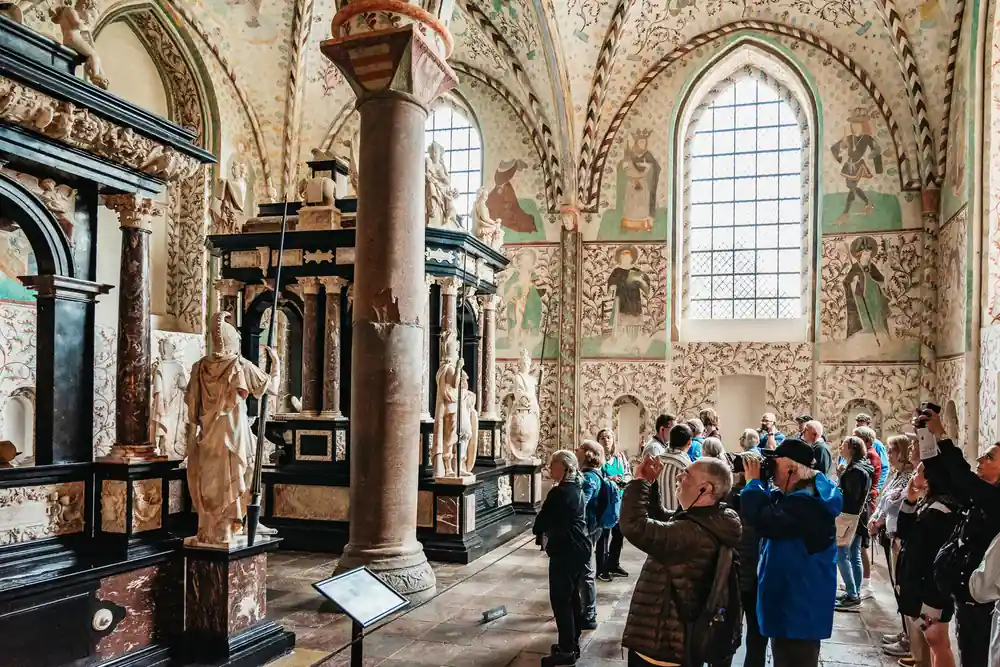
The chapel is the oldest continuous interior in the castle and the one least changed by fire and rebuilding. It is small relative to the ballroom and easy to walk past quickly, which would be a mistake: the carved detail is the finest surviving craftsmanship in the building.
It also explains something about the castle's history that the military exterior hides. Kronborg was a royal residence with the functions a residence requires, and the chapel is where that reading of the building is most obvious. Standing in it, the fortress briefly becomes a palace again.
Fifteen minutes is enough unless you are particularly interested, and it sits naturally between the apartments and the descent to the casemates.
1
One ticket covers the castle, the exhibitions, the casemates and Holger the Dane.
Down into the casemates
The casemates are the reason most visitors remember Kronborg, and they are the part of the visit that needs the most planning. They are cold in every season, uneven underfoot, and unlit in long stretches, with the lighting deliberately kept low. A phone torch is genuinely useful and is the one piece of equipment worth bringing.
They were built to hold a garrison under siege, with space for men and for the supplies that would keep them, and walking their length gives a sense of the castle's military purpose that no amount of ramparts can. At the end sits Holger the Dane, carved asleep and waiting.[4]
Allow forty minutes, more if the castle is quiet and you can walk without a queue behind you. This is the part to see first if your time is short, not last.
Putting the parts in the right order
The route that works best is not the one most people take. Start in the courtyard to get the scale of the place, then go straight down to the casemates while they are still empty, then come up for the chapel, the apartments and the ballroom, and finish on the ramparts with the water in front of you.
That order inverts the usual flow, which is exactly the point: mid morning and early afternoon are when the underground chambers are busiest, and they are much diminished as an experience with a crowd moving through them.
Two to three hours covers all four parts without hurrying. If you have ninety minutes, take the casemates and the ballroom and accept that the apartments will be a walk rather than a visit.
If you only have an hour
An hour is not enough for Kronborg, but it happens often: a late train, a short winter closing time, or a stop between connections. The question then is what to cut, and the answer is firmer than most visitors expect.
Take the casemates and the ballroom. The casemates are the part of the castle you will not find anywhere else and the part you will describe afterwards, and the ballroom gives you the scale of the building in a single room. Together they take about forty minutes at a brisk pace and they cover both halves of what Kronborg is: a fortress and a palace.
Cut the royal apartments. That feels wrong, because they are the rooms a castle visit is supposed to be about, but they are the part that suffers least from being skipped and the part that rewards slow looking most. Walking them in ten minutes gets you almost nothing.
Then spend whatever is left in the courtyard and on the ramparts, which cost no time to enter and give you the view that explains the site. An hour spent that way is a real visit. An hour spread evenly across all four zones is a tour of corridors.
How long each part takes
Times the castle suggests for each route; a full visit runs two to three hours.
What seeing the inside costs
Every figure is a "from" price. The casemates carry no separate charge, and under 18 enters free.
Practicalities inside
Walking the castle
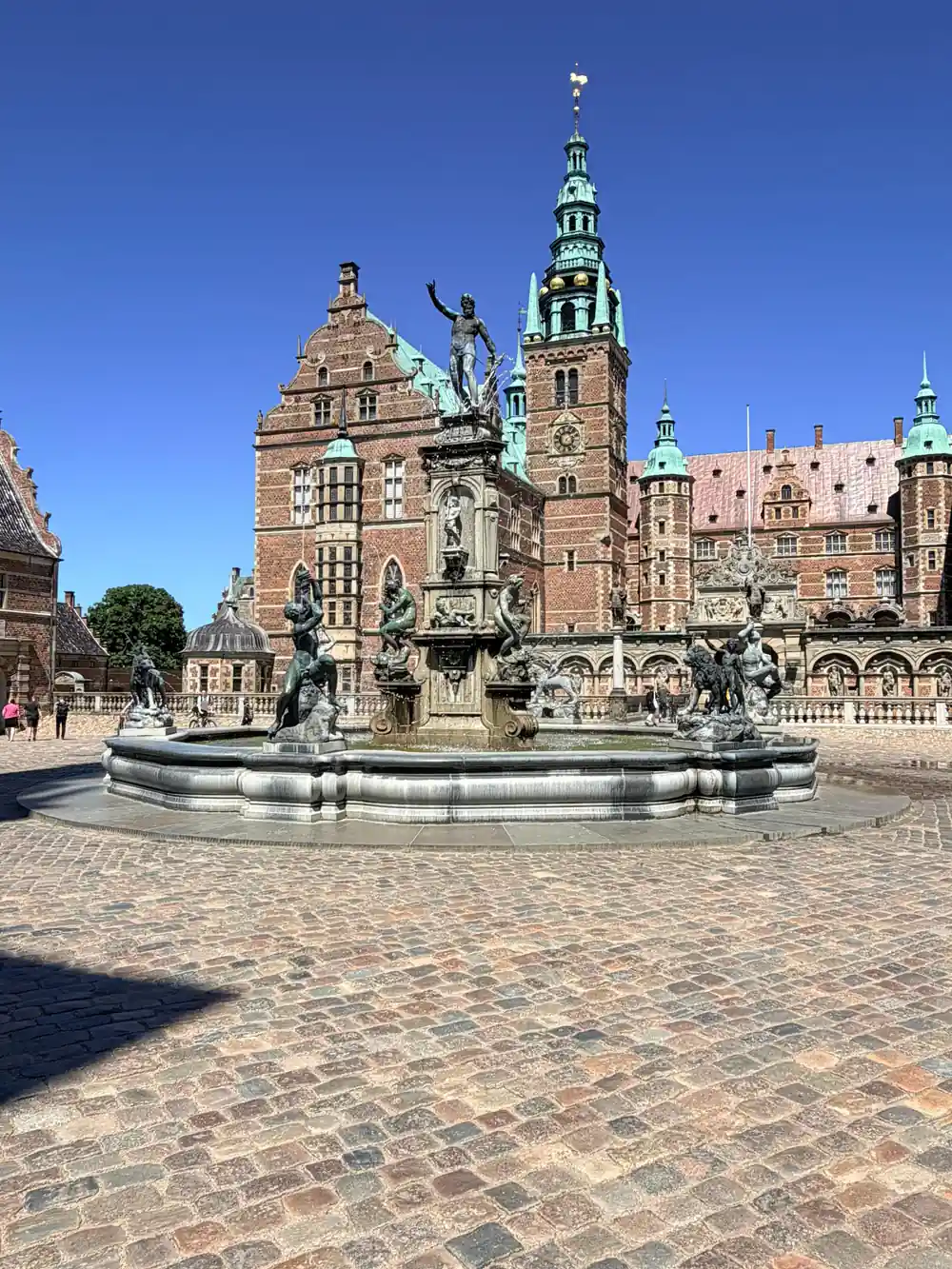
The courtyard first
The enclosed square the play is staged in, and the way to every other entrance.
The royal apartments
Period rooms showing how the court lived when it was in residence.
The chapel
The ceremonial heart of the castle, and it survived the 1629 fire.
The ballroom
The largest hall, and the most striking single space inside.
Down to the casemates
A separate descent from the courtyard into the galleries below.
Out onto the ramparts
The guns face the Sound, with Sweden visible across the water.
See inside on the guided day
from US$213Reserve now & pay later