The essentials
- Holger Danske, a legendary Danish giant, rests in the casemates beneath Kronborg Castle. He awakens only when Denmark faces its darkest hour, becoming a symbol of resistance and national hope.
- Underground passages called kasematterne served as military fortifications and shelter. Soldiers could survive prolonged sieges in these stone chambers, protected from cannon fire and siege warfare above ground.
- The tunnels plunge into near-total darkness, with passages growing colder and damper as you descend deeper into the fortress. The air is heavy and the silence profound in these centuries-old chambers.
- Hundreds of soldiers sheltered in the casemates during attacks, relying on stored provisions, fresh water sources, and careful rationing. The tunnels kept them hidden and secure from external threats.
- Beyond Holger Danske, Kronborg's underground holds ghost stories and folklore whispered by soldiers across centuries. These tales merged myth with the real experiences of men who defended the fortress from below.
- Top choice Four sites in one day from US$213 Casemates accessIncluded in admissionTime to go belowWithin a fixed scheduleGuide undergroundGuided at Kronborg Check availability
- Easy-pace castles day from US$154 Casemates accessIncluded in admissionTime to go belowWithin a fixed scheduleGuide undergroundGuided at Kronborg See this tour
- Kronborg entry ticket from US$23 Casemates accessIncluded in admissionTime to go belowAs long as you likeGuide undergroundOn your own See this tour
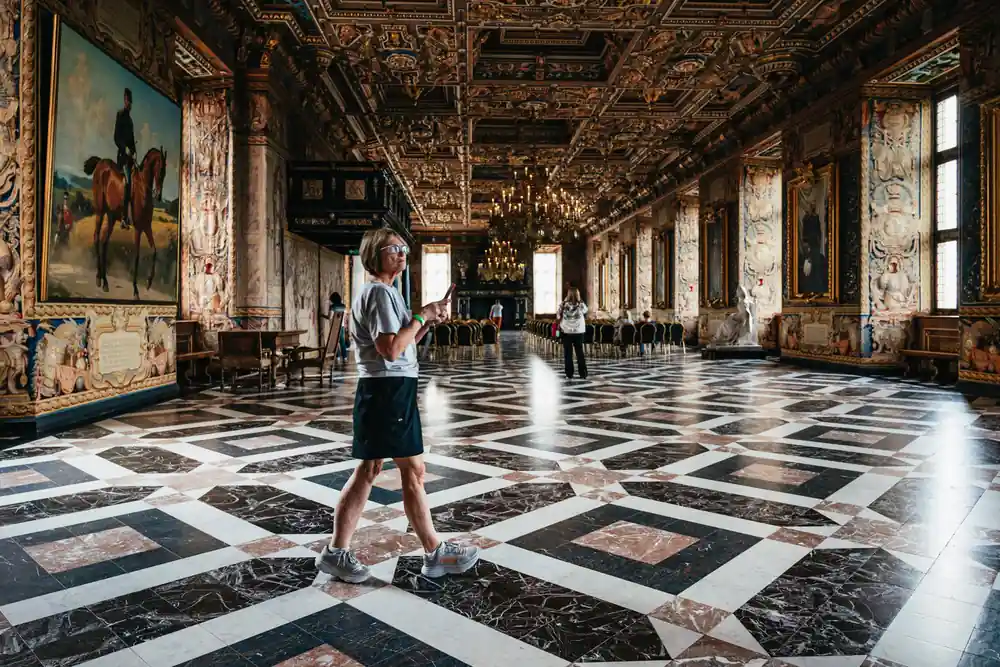
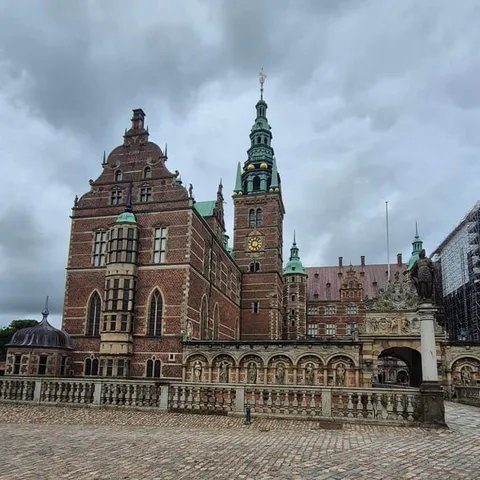
During sieges, the casemates were the soldiers' hiding place, a dark, cold refuge filled with weapons, supplies, and prisoners of war.
Going below the castle
Before you descend
- Included in Kronborg admission, 150 DKK adult or 135 DKK online
- Colder than the rooms above, and damp in winter
- Dimly lit, with its own entrance from the courtyard
- Uneven stone underfoot and steps down
What you will find
- Passages built for defence when the castle was a fortress
- The Holger the Dane statue, in the casemates themselves
- Room for up to 350 men during a siege
- Hibernating bats, a protected species, in winter
The Kasematterne: Kronborg's Underground Fortress
Beneath Kronborg Castle lies a network of underground passages and chambers known as the kasematterne, a masterwork of Renaissance military engineering designed to withstand prolonged siege. Built into the fortress foundations, these vaulted tunnels extend deep below the castle's outer walls, creating a self-contained stronghold where a garrison could survive months of attack from the surface. The kasematterne were not dungeons but functional military infrastructure, with thick stone walls capable of absorbing cannon fire and multiple chambers for storing ammunition, provisions, and equipment. When you descend into these passages during your tour, you enter the same shadowed corridors that Danish soldiers occupied during times of conflict, experiencing firsthand the claustrophobic reality of underground fortress life.
The architecture of the kasematterne reflects the strategic thinking of 16th-century military planners who understood that traditional castle walls alone could not withstand modern artillery. The passages are laid out in a grid pattern, allowing defenders to move supplies and troops efficiently while remaining protected. Small gun emplacements and firing positions were carved into the walls, permitting soldiers to return fire through narrow openings while staying safely inside the fortified structure. The stone construction has endured for over four centuries, and visitors can still observe the craftsmanship in every archway and carefully cut block.
Life Below: How Soldiers Survived Underground Sieges
During a siege, the kasematterne transformed into a subterranean town where hundreds of soldiers, officers, and support personnel lived and worked in near-total darkness. Fresh water was critical to survival, and the fortress was designed with access to underground springs and collection systems for rainwater channeled through the castle above. Food storage chambers held grain, salted meat, and dried provisions sufficient to feed a garrison for extended periods. Soldiers rotated between guard duties at the gun positions, maintenance work keeping equipment ready, and rest periods in cramped sleeping quarters carved from the stone walls. The air grew thick with smoke, moisture, and the smell of hundreds of men confined in close quarters, yet this underground refuge proved far more survivable than exposure to cannonball and musket fire on the surface.
The psychological toll of kasematte duty could be as challenging as the physical conditions. Soldiers spent weeks or months in near-perpetual darkness, with only candles and torch-light to push back the black stone corridors. The dampness seeped into clothing and bones, and disease spread quickly in such close quarters. Yet the kasematterne also offered protection that often meant the difference between life and death. Archaeological evidence and historical records suggest that garrisons sheltering underground experienced significantly higher survival rates during bombardments than soldiers exposed on the castle's upper levels and ramparts.
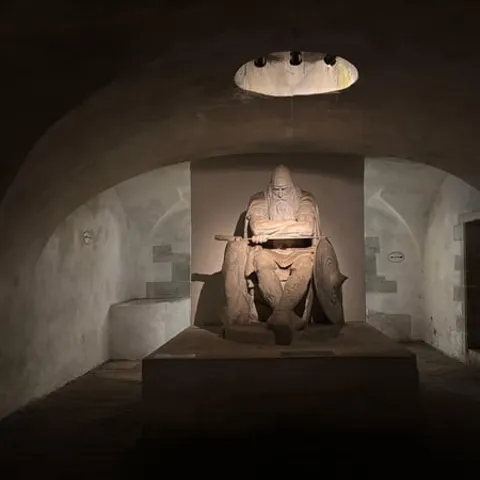
Stone sentinel in candlelit depths of Kronborg's sleeping quarters
Holger Danske: The Sleeping Giant of Kronborg
Among the most enduring legends of Kronborg is the story of Holger Danske, a colossal stone figure that rests in one of the deepest kasematte chambers. According to Danish tradition, Holger Danske is not merely a sculpture but a slumbering warrior-giant who will awaken in Denmark's darkest hour to save the nation from destruction. The statue sits upright, his beard grown long from centuries of sleep, his great sword resting across his lap. Whether Holger Danske was originally carved as a decorative piece, a morale symbol for soldiers, or something with deeper mythological roots remains debated by historians. What is certain is that by the medieval period, legends about a giant named Holger Danske were already woven into Scandinavian folklore, connecting him to King Charlemagne's court and ancient tales of heroic slumber.
The figure itself is carved from stone with remarkable detail, showing a bearded man in warrior's garb, his expression serene but watchful. Visiting this chamber during your tour requires descending into the deepest reaches of the kasematterne, moving further from natural light with each step. The experience of encountering Holger Danske in person differs sharply from photographs: the sheer scale of the figure becomes apparent only when standing before it in the darkness, surrounded by stone walls that have stood for centuries.
Holger Danske and Denmark's Resistance
During the Nazi occupation of Denmark in World War II, the legend of Holger Danske transformed from folklore into a powerful symbol of national resistance. Danish freedom fighters adopted his name, calling their underground movement the Holger Danske sabotage group. The sleeping giant became a metaphor for Denmark itself, dormant under occupation but destined to awaken and reclaim its sovereignty. Posters, pamphlets, and resistance communications invoked Holger Danske as inspiration for those who worked in secret to undermine the occupation. The mythical warrior represented the belief that Denmark's true strength lay dormant but undefeated, waiting for the moment of liberation.
This repurposing of an ancient legend as a modern resistance symbol demonstrates how deeply mythological stories can speak to people in times of crisis. For Danes living under foreign rule, Holger Danske embodied hope that their nation would not remain conquered forever. After the war, the figure took on even greater symbolic importance as a monument to Danish independence and resilience. Today, visitors to Kronborg encounter not just a medieval legend but a touchstone of twentieth-century Danish identity.
350
Up to 350 men could shelter in the casemates with six weeks of supplies.
The Darkness of the Underground Passages
When you walk through the kasematterne during your tour, you will experience the passages largely as soldiers and garrison members experienced them: in near-total darkness. Modern lighting now illuminates key chambers and pathways, but the oppressive blackness of the stone tunnels becomes immediately apparent when you move beyond the lit sections. The ancient passages absorb light; the walls seem to pull it inward, creating shadows that deepen with distance. This atmospheric quality is not incidental to understanding the kasematterne but central to it. The darkness shaped how soldiers moved, thought, and endured their time underground. Candles and torches provided minimal illumination, casting dancing shadows that made the stone passages feel even more confining and otherworldly.
The temperature below ground remains constant year-round, cool and damp, a reminder of the fortress's role as a subterranean refuge. Visibility in some passages extends only a few meters before the stone walls fade into shadow. This limited sight line meant that defenders had to rely on knowledge of the passages they had memorized through repeated movement and duty. Visitors often find that walking through the kasematterne creates an unexpected emotional response, combining fascination with a subtle unease born of confinement and darkness that no photograph fully captures.
Stories and Spirits of the Deep Fortress
Beyond the documented history and archaeological remains, Kronborg's kasematterne have accumulated layers of legend and ghost stories across the centuries. Locals and visitors have reported mysterious sounds echoing through the passages, footsteps when no one else is present, and apparitions of soldiers in historical uniforms disappearing around corners. Whether these accounts are genuine supernatural phenomena or products of the psychological atmosphere created by darkness, confinement, and centuries of human suffering is a question each visitor must answer for themselves. The kasematterne certainly provide an environment where the boundary between the historical and the uncanny seems to thin. Stories circulate of a woman in grey clothing seen descending into the deepest chambers, of a soldier's voice calling out orders that no living person could be giving.
Some tales connect these apparitions to specific historical events, such as the great siege of Kronborg or the numerous conflicts the fortress endured. Others seem to belong to the realm of pure folklore, stories told and retold until they become as much a part of Kronborg's identity as the stone itself. Whether you encounter anything unusual during your tour, the kasematterne's reputation for strange occurrences adds another layer to the experience of walking its passages and standing before Holger Danske in the depths.
What reaching the casemates costs
Every figure is a "from" price, per adult. The casemates are inside the Kronborg admission.
Experiencing Kronborg's Underground on Your Tour
Your full-day minibus tour from Copenhagen includes time at Kronborg Castle, though the length of your kasematte visit will depend on the overall tour schedule and group size. The descent into the underground passages is not physically difficult, but the stone stairs are worn and require careful footing in places. Once below, you will have the opportunity to walk through multiple chambers, observe the engineering that has preserved these spaces for centuries, and stand before Holger Danske in his stone vigil. Your tour guide can provide context about the fortress's military history, the daily life of soldiers in the kasematterne, and the legends that surround both the underground passages and the sleeping giant.
Prepare for the cool temperature underground by bringing a light jacket, and wear comfortable shoes with good grip for the stone stairs. The kasematterne create an experience distinctly different from the castle's upper levels and grounds, offering insight into the fortress as a working military installation rather than merely a historical monument. This underground portion often proves to be the most memorable part of a Kronborg visit, combining tangible history, architectural achievement, and the weight of centuries in an immersive environment that surface-level tourism cannot replicate.
The underground, priced
Every figure is a "from" price. Under 18 enters free, and the casemates cost nothing beyond admission.
The casemates through time
What is down there
A refuge, not a cellar
Dark, cold chambers stocked with weapons, supplies and prisoners of war.
A working garrison
The casemates held a forge, a stable and a drill hall for training.
Holger the Dane
A statue of the sleeping giant rests in the passages, and he is hard to miss.
A French legend, adopted
Holger came from French medieval legend and was made Danish by H. C. Andersen.
Bats in winter
The passages now shelter protected bat species through the cold months.
Step Into Kronborg's Secret Underground
from US$213Reserve now & pay later