The essentials
- A devastating blaze consumed much of Frederiksborg Castle. Brewer J.C. Jacobsen funded the entire restoration, preserving Denmark's royal heritage.
- Danish kings were crowned within these walls. The chapel displays the Order of the Elephant, Denmark's highest honor, symbolized by elephant sculptures.
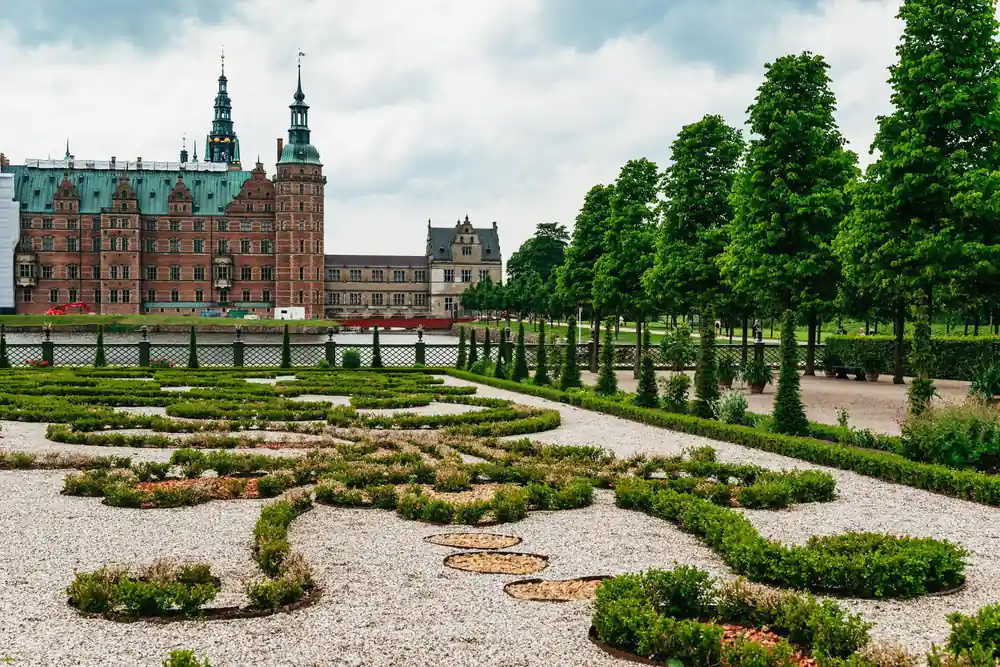
- Terraced gardens descend from the palace in geometric precision. Royal monograms woven into hedge patterns reflect centuries of Danish monarchy.
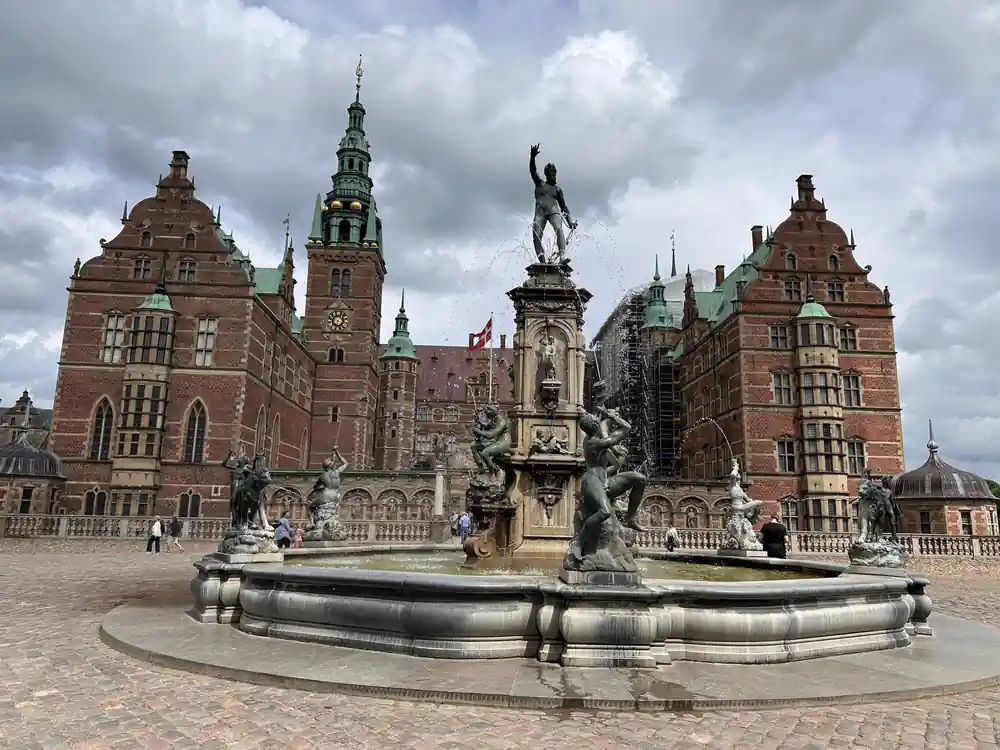
- Built as a royal residence, the palace evolved through centuries of royal ceremonies, artistic commissions, and architectural refinement on its island setting.
- Beyond the manicured gardens, the estate includes a deer park where visitors encounter the landscape that has surrounded Danish royalty for generations.
- Top choice Four sites in one day from US$213 Includes FrederiksborgYes, about two hoursFrederiksborg guidedNo, self-guidedAlso covers RoskildeCathedral and Viking ships Check availability
- Easy-pace castles day from US$154 Includes FrederiksborgYes, with lunch in HillerodFrederiksborg guidedYesAlso covers RoskildeNo See this tour
- Kronborg entry ticket from US$23 Includes FrederiksborgNoFrederiksborg guidedNot applicableAlso covers RoskildeNo See this tour
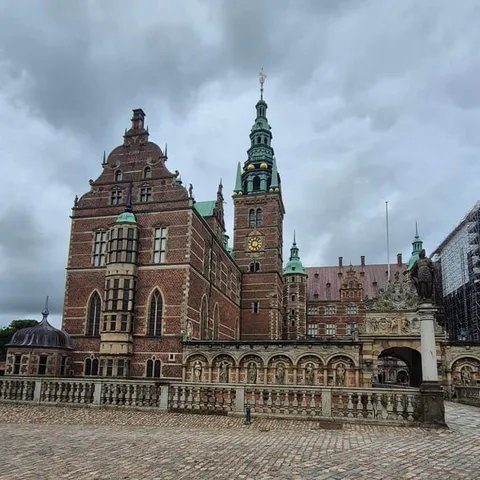
The founder of Carlsberg, brewer J. C. Jacobsen proposed the establishment of a museum of national history at the Castle and he offered to pay both for the reconstruction and for the Museum's further expenses.
Seeing Frederiksborg without driving to Hillerod
At Frederiksborg
- Adult admission 125 DKK, under 18 free
- Open every day of the year, 10:00 to 17:00
- About two hours here on the guided day, self-guided
- The Museum of National History, a Carlsberg Foundation department
Worth knowing
- Large parts of the interior burned in the 1859 fire
- Student and senior tickets are 105 DKK
- Hillerod is well north of Copenhagen, so transport matters
- Free cancellation on the guided day up to 24 hours before
Christian IV's Palace and the Fire of 1859
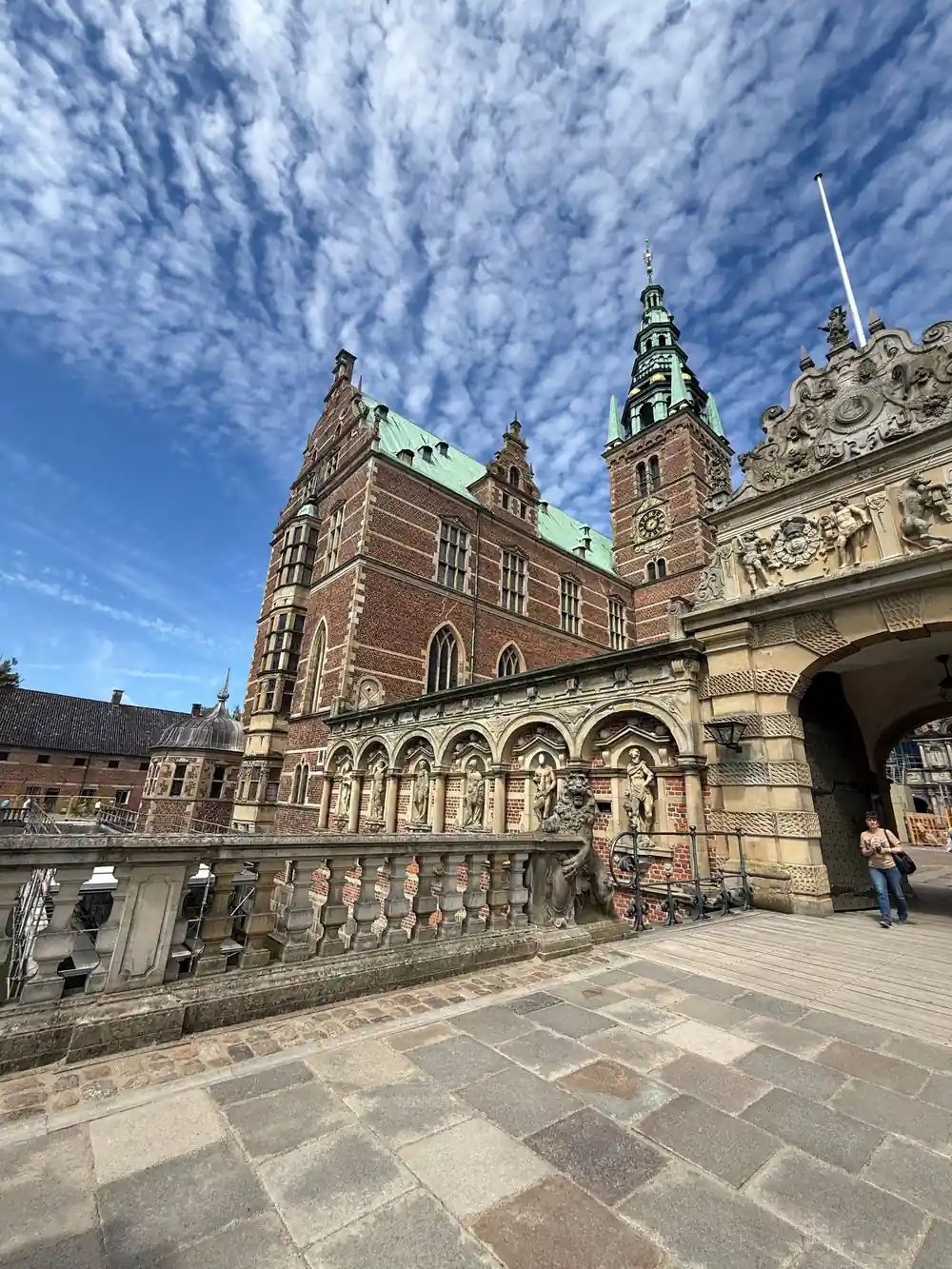
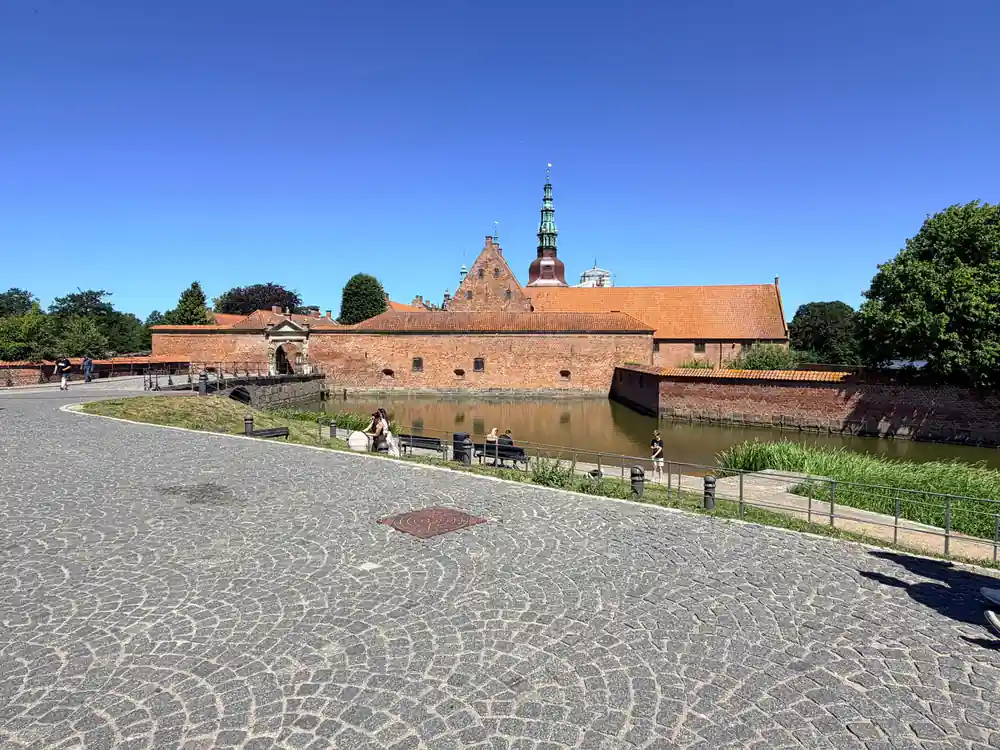
Frederiksborg Palace stands on three islets in Slotssøen, the castle lake, roughly 35 kilometers north of Copenhagen. King Christian IV built this Renaissance masterpiece between 1600 and 1634, making it one of northern Europe's grandest royal residences. The king used it as a summer retreat and as a statement of Danish power during a period of expansion. For two centuries, Frederiksborg served as the primary seat of Danish royalty, hosting court ceremonies and state functions within its red-brick towers and ornate facades.
On the night of 26 February 1859, a catastrophic fire broke out in the palace's western wing. The blaze spread rapidly through wooden interiors and decorative elements, destroying much of the building's interior and threatening to reduce the entire structure to ruins. Priceless furniture, tapestries, and artworks were lost in the flames. The fire was a national tragedy, as it consumed centuries of royal heritage and cultural memory. What remained standing was largely a hollow shell, and many believed the palace would never be restored to its former glory.
J.C. Jacobsen's Gift and the National History Museum
The brewery magnate J.C. Jacobsen, founder of the Carlsberg brewery, stepped forward with an extraordinary offer. He funded the complete restoration of Frederiksborg Palace and, in an act of patriotic generosity, donated it to the Danish people as a national history museum. Work began in 1860 and took decades to complete, employing skilled craftspeople who meticulously recreated interior details based on historical records and salvaged elements. Jacobsen's investment transformed the burned-out ruin into a functioning museum that would preserve Danish cultural heritage for future generations.
Today, the Frederiksborg castle interior displays an extensive collection of Danish art, royal furnishings, and historical portraits spanning centuries. The museum houses over 8,000 objects, from Renaissance tapestries to 19th-century paintings. Visitors walk through rooms that tell the story of Danish monarchy and aristocratic life. The restoration work respected the original design while incorporating modern curatorial standards. This transformation from private royal seat to public museum remains one of Europe's most successful heritage preservation projects.
The Chapel and the Order of the Elephant
The Frederiksborg palace church occupies a central position within the palace complex and serves as one of Denmark's most significant royal spaces. This chapel functioned as the official coronation site for Danish monarchs from 1671 until 1840, making it a place of profound ceremonial importance. The interior features ornate decorations, painted ceilings, and an elaborate altar that reflects both Renaissance and Baroque artistic traditions. Every Danish king crowned within these walls was invested with royal authority according to centuries-old traditions and rituals.
Above the chapel entrance and throughout its decoration appears the symbol of the Order of the Elephant, Denmark's highest order of chivalry. This order, dating back to the 15th century, honors those deemed worthy of royal recognition. The elephant symbol appears on altarpieces, in carved stonework, and in the chapel's decorative scheme. The order represents the pinnacle of Danish honors and remains in use today. During your tour, the chapel's architectural details and symbolic elements reveal how Danish rulers connected spiritual authority, national identity, and the dignity of the throne.
1859
The 1859 fire consumed the palace in hours, yet a wealthy brewer's donation rebuilt it completely.
The Baroque Gardens and Royal Monograms
Beyond the palace walls stretches the Frederiksborg park, a masterpiece of 17th-century landscape design. The formal baroque garden was originally laid out during Christian IV's reign and reflects the geometric precision characteristic of gardens from that period. The garden descends in terraced levels down toward the lake, creating a theatrical effect when viewed from the palace. Hornbeam hedges and lime trees frame carefully planned walkways and open spaces. The garden demonstrates how absolute monarchs commanded not only architecture but entire landscapes to express their power and aesthetic vision.
Within the hedge work of the Frederiksborg park are living monograms created from precisely trimmed boxwood and hornbeam. These heraldic symbols spell out the initials of Danish kings, most notably the interlocking ciphers of Christian IV. The monograms are visible from both ground level and from elevated vantage points within the garden, showcasing the technical skill required to maintain them across centuries. The terraced design allows visitors to walk among these living sculptures and observe how royal symbols integrate with the natural landscape. The baroque gardens rank among the finest surviving examples of this style in Northern Europe.
What to See in the Frederiksborg Castle Interior
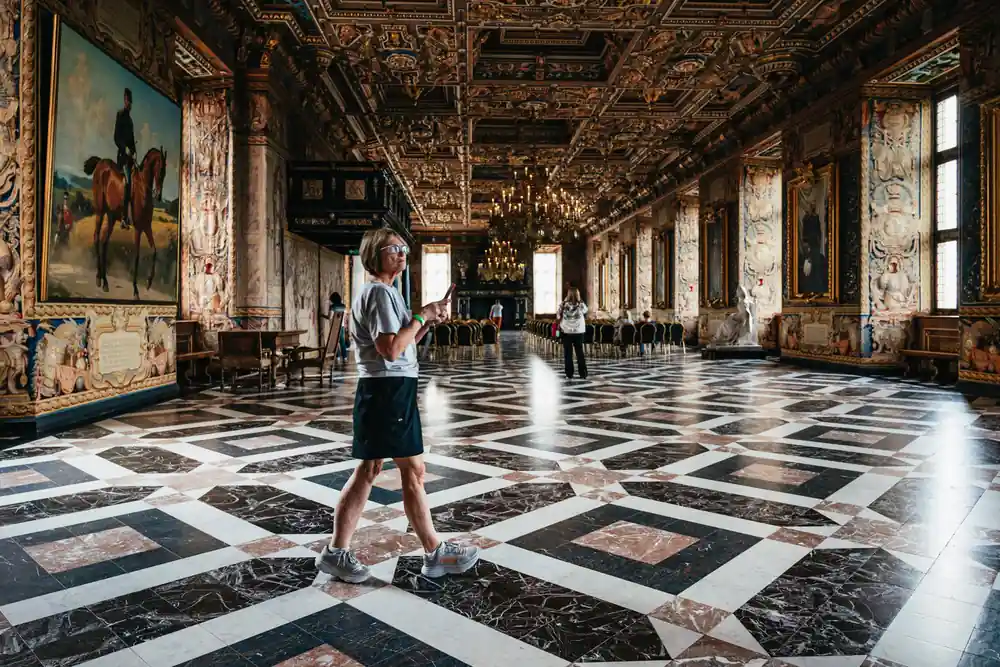
The Frederiksborg great hall represents the palace's most impressive interior space. This vast chamber features a coffered ceiling, intricate wall decorations, and museum displays of royal portraiture and decorative arts. The great hall once hosted banquets and state ceremonies; today it houses a curated collection of Danish paintings from the Renaissance through the 19th century. Walking through the great hall connects visitors to moments of significant Danish history, from royal celebrations to diplomatic negotiations. The quality of light entering through tall windows illuminates artworks and architectural details that reveal the craftsmanship of both the original builders and the 19th-century restorers.
Frederiksborg castle what to see extends through numerous galleries and chambers, each presenting different aspects of Danish royal life and national history. Renaissance rooms display furniture and decorative objects from Christian IV's era. Later galleries showcase 18th and 19th-century acquisitions and commissions. The museum guides visitors through approximately 80 rooms, each contributing to an understanding of how Danish monarchy evolved over four centuries. The scale of the collection means visitors should plan to spend at least three to four hours exploring thoroughly, though the minibus tour provides time to view key highlights and the most significant spaces.
Practical Details for Your Visit
Frederiksborg is located in Hillerød, accessible as part of the full-day minibus tour from Copenhagen. The journey from central Copenhagen takes approximately one hour by minibus. The tour includes hotel pickup and drop-off, transportation between sites, and entrance fees to the palace and museum. Your driver and guide provide context for what you see and manage logistics throughout the day. The minibus accommodates small groups, creating a more intimate experience than large tour buses offer. This scale allows for flexibility in pacing and opportunities to ask questions about what you observe.
The tour incorporates a lunch break at midday, allowing time to eat at one of the cafes near the palace or to bring provisions. Water and WiFi are available on the bus during transit, helping you stay refreshed and connected. Wear comfortable walking shoes, as exploring the palace interior involves considerable walking across multiple floors and through numerous rooms. The baroque garden invites outdoor walking as well, so weather-appropriate clothing enhances your experience. The minibus tour integrates Frederiksborg with visits to Kronborg Castle and Roskilde Cathedral, creating a comprehensive journey through Denmark's most important royal and religious heritage sites.
Why Frederiksborg Matters in Danish History
Frederiksborg represents far more than a beautiful building or a museum collection. It embodies Danish national identity, royal continuity, and the recovery from historical tragedy. The palace witnessed the height of Danish power under Christian IV and served as a symbol of sovereignty for over three centuries. The 1859 fire threatened to erase this history entirely, yet Jacobsen's restoration demonstrated how a nation values and preserves its cultural foundation. The fact that a private citizen could transform a national disaster into a lasting institution speaks to Danish civic values and the relationship between commerce, patronage, and heritage preservation.
Today, Frederiksborg attracts visitors not only interested in royal history but also in understanding how societies recover from loss and reimagine their relationship with the past. The palace's ongoing role as a museum ensures that each generation rediscovers the lives, choices, and achievements of Danish rulers and their era. The Frederiksborg park and chapel remain spaces where the aesthetic and spiritual dimensions of monarchy become tangible. For visitors on the full-day tour, Frederiksborg provides the most comprehensive single site for understanding the visual language and historical narrative of Danish monarchy.
What Frederiksborg charges by ticket
Gate prices at the museum's own ticket office.[1]
Frederiksborg on its own, or as part of the day
Every figure is a "from" price. Admissions are adult gate prices; under 18 is free at both castles.
When Frederiksborg is open
How the palace came back
Christian IV builds
Between 1600 and 1620 the king demolished the older castle and raised the Renaissance palace.
The 1859 fire
Fire tore through the castle and large parts of the interior were burned to a cinder.
A brewer steps in
J.C. Jacobsen, founder of Carlsberg, offered to pay for the reconstruction.
A museum instead of a residence
Jacobsen proposed a museum of national history rather than a royal home.
Opened 1878
The Museum of National History has been a department of the Carlsberg Foundation since.
See it all: chapel, portraits, and gardens
from US$213Reserve now & pay later