The essentials
- Frederik II turned the older fortress into the Renaissance castle that stands today.[5]
- Ships passing through the Sound paid dues here, collected for more than four hundred years.
- Fire destroyed much of the castle, which was then rebuilt.
- UNESCO inscribed Kronborg for its place in the history of Northern Europe.[4]
- Internationally the castle is Elsinore, the setting of Shakespeare's Hamlet, and soldiers first staged the play here in 1816.
| The fortress, 1420s | The castle, 1574-1585 | Today | |
|---|---|---|---|
| Purpose | Control the Sound | Royal residence and fortress | Museum and World Heritage site |
| Built by | Eric of Pomerania's era | Frederik II | Slots- og Kulturstyrelsen runs it |
| Income | Sound Dues | Sound Dues | Admission, 150 DKK adult |
| Defences | Earthworks and guns | Bastions and casemates | Casemates open to visitors |
| Status | Royal fortress | Royal castle | UNESCO listed, 2000 |
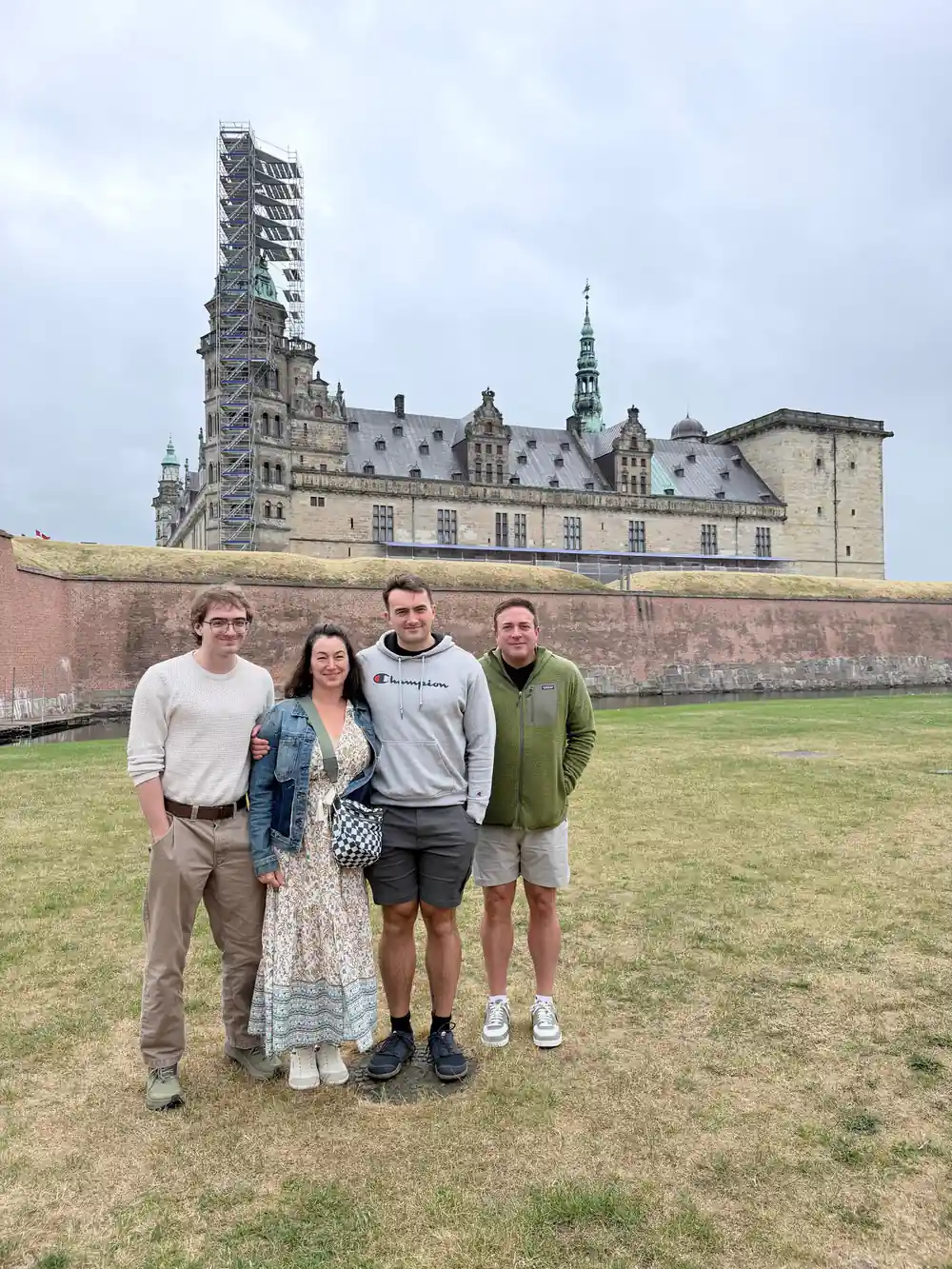
Kronborg Castle stands at a strategically vital point overlooking the Oresund, the narrow stretch of water between Denmark and Sweden.
The three facts that explain the rest
The essentials
- UNESCO World Heritage since 2000
- Renaissance castle built 1574 to 1585 by Frederik II
- Badly damaged by fire in 1629
- Funded by the Sound Dues for over four hundred years
Seeing it today
- Adult 150 DKK, or 135 DKK online, under 18 free
- Open daily 10:00 to 17:00 from 28 March to 31 October
- Casemates and Holger the Dane included in the ticket
- Run by Slots- og Kulturstyrelsen
A toll station that became a castle
Kronborg exists because of a tax. From the 1420s a fortress stood on this spit of land for one reason: the Sound narrows here to a few kilometres, and a crown that could command the channel could charge every ship that passed through it. The Sound Dues were levied for more than four centuries and they made the Danish crown extraordinarily rich.
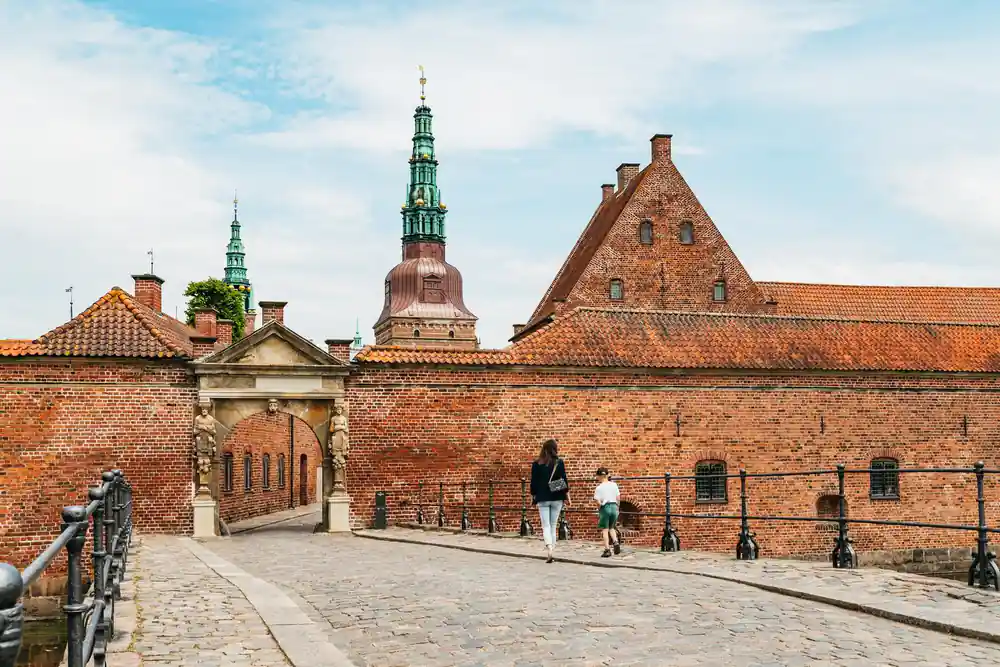
That origin explains the shape of the place better than any architectural description. The building faces the water, its heavy outer works point at the shipping lane, and its position was chosen by a customs officer's logic rather than an architect's. The palace came later and was grafted onto a machine built for control.
It also explains why the castle mattered far beyond Denmark. A fortress that can tax the entrance to the Baltic is a piece of European infrastructure, and the money that flowed through it paid for the building that visitors walk through today.
Frederik II and the rebuild of 1574 to 1585
The castle that exists now is substantially the work of Frederik II, who between 1574 and 1585 turned the older fortress into a Renaissance palace. The rebuild gave Kronborg its sandstone facing, its copper roofs and the ballroom that remains one of the largest of its kind in northern Europe.
This was display architecture funded by the tolls. A king who taxed the Sound wanted the ships paying that tax to see what they were paying for, and the castle was designed to be read from the water. The effect survives: the best view of Kronborg is still the one a ship's crew would have had.
It is this version of the building that carried its name across Europe, and that reputation is what eventually put it into a play written in England by someone who never saw it.
The fire of 1629 and what was lost
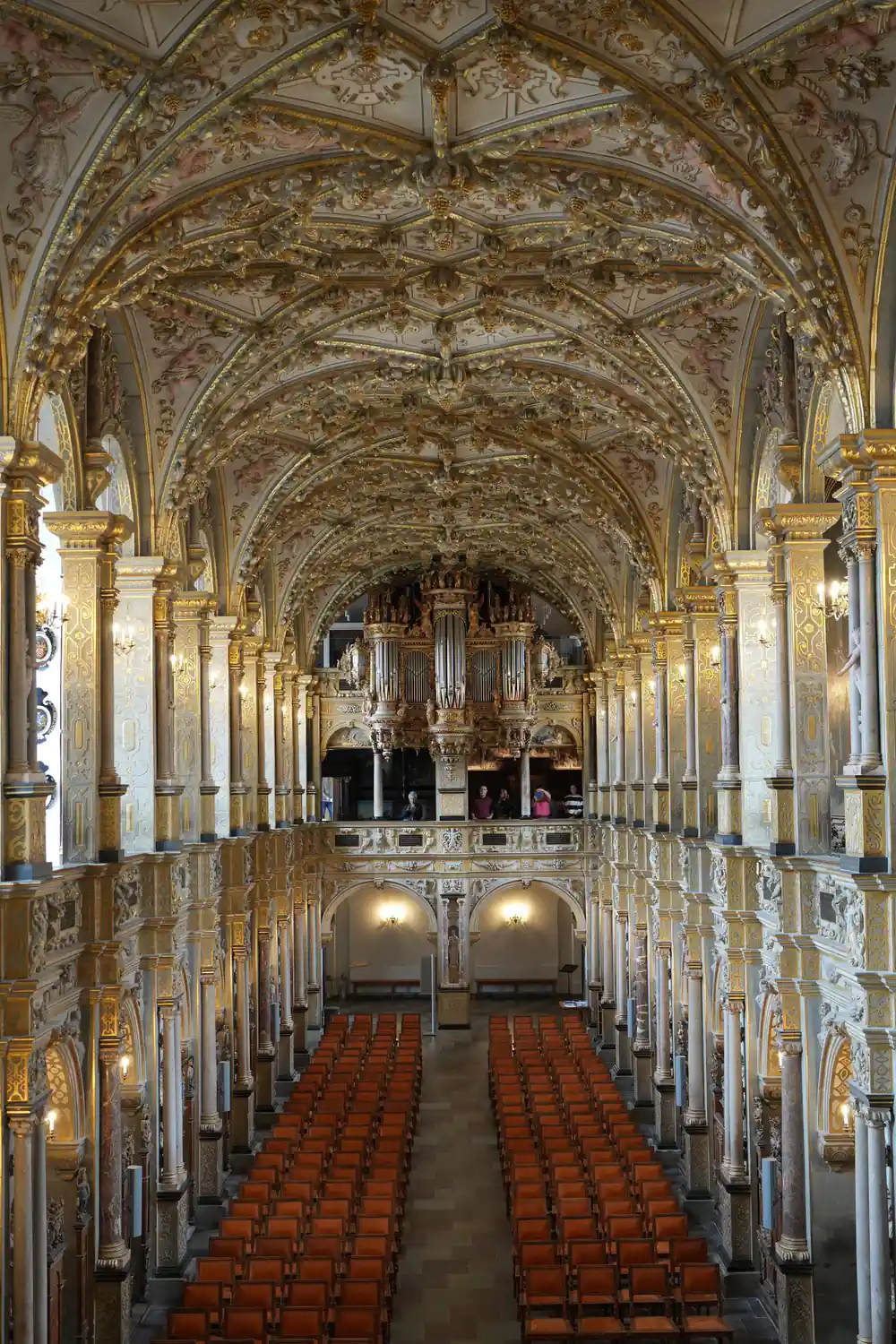
In 1629 fire destroyed much of the castle. The chapel survived largely intact, which is why it remains the most complete original interior in the building, but the royal apartments and much of the rest were gutted. Christian IV rebuilt it, and the version standing today is that reconstruction rather than Frederik II's original.
Knowing this changes how the interiors read. The scale and the plan are sixteenth century; a great deal of the surface is seventeenth. Rooms that feel like a single coherent period are often the result of a rebuild working within walls that survived a fire.
The castle was then taken by Swedish forces in 1658, which stripped it further. What a modern visitor sees is a building that has been burnt, looted and repurposed, and which nonetheless keeps the outline its builders intended.
100
Ships paid a toll to pass Kronborg for more than four hundred years.
Two centuries as a barracks
From the 1700s until 1923 Kronborg served as a military barracks, and that is the longest single use in its history. It is also the least visible one, because the restoration that followed removed most of the partitions and fittings that the army had installed.
The traces are still there if you know to look: enlarged kitchens built to feed hundreds, reinforced guard rooms, and grand spaces that were divided into smaller ones and then opened up again. The garrison era is why the interiors are sparse rather than furnished, and why the building survived at all.
A castle with a job gets maintained. Kronborg stayed useful to whoever governed Denmark for five hundred years, and that continuous usefulness is the reason it did not fall into the ruin that took so many comparable fortresses.
Elsinore, Hamlet, and the name the world uses
Outside Denmark the castle is often called Elsinore, which is the anglicised form of Helsingor, the town it stands beside. The name travelled because of Hamlet, which Shakespeare set at Elsinore, and it has stuck so firmly that many visitors arrive without realising Elsinore and Kronborg are the same place.
Shakespeare almost certainly never visited. English players toured the Baltic in the late sixteenth century and the castle's reputation reached London through them, which is enough to explain the setting without requiring the playwright to have seen it.
The association is now part of the building's identity, and the castle leans into it with performances in the courtyard. In 2000 Kronborg was inscribed on the UNESCO World Heritage List, recognition that rests on the Renaissance architecture and its role in northern European history rather than on the play.
Reading the building while you are standing in it
Facts about a castle are only useful if they change what you notice, and at Kronborg three of them do most of that work. The first is the tolls: once you know the building was funded by taxing the ships outside it, the orientation stops looking decorative and starts looking deliberate. The castle faces its revenue.
The second is the fire of 1629. Knowing that the chapel survived and most of the rest did not explains why the chapel feels older and denser than the rooms around it, and why interiors that appear to be of a piece are in fact a reconstruction working inside surviving walls.
The third is the barracks era. Two centuries of military use is why the rooms are sparse rather than furnished, and why the scale so often exceeds the contents. Visitors who expect a palace read that emptiness as neglect; visitors who know the history read it as evidence.
Taken together they turn a walk through impressive rooms into something closer to reading a document. The building records what happened to it, and almost every oddity in the plan is the trace of a decision someone made for a practical reason at the time.
One last point ties the dates together. Every phase of the building was driven by money or by defence, never by fashion, and that is unusual for a castle of this rank in northern Europe.
Kronborg by date
Dates from the castle's own account, VisitCopenhagen and the UNESCO listing.[4][5]
Seeing the history for yourself
Every figure is a "from" price. Under 18 enters free.
The dates that matter
Kronborg in five facts
It began as a toll station
The castle exists to tax ships passing the narrowest point of the Sound.
Frederik II made it a palace
Between 1574 and 1585 the fortress became a Renaissance castle.
Fire nearly ended it
Much of the castle burned in 1629 and had to be rebuilt.
It held a garrison underground
The casemates sheltered up to 350 men with six weeks of supplies.[6]
The world knows it as Elsinore
Shakespeare set Hamlet here, and soldiers first staged the play at the castle in 1816.
See the castle behind the facts
from US$213Reserve now & pay later