The essentials
- Kronborg Castle was constructed in the 1570s under King Frederik II as a Renaissance fortress to guard the narrow strait between Denmark and Sweden.
- The Sound Dues, a tax levied on ships passing through the strait, made Denmark wealthy and financed the castle's construction and maintenance for centuries.
- Kronborg Castle earned UNESCO recognition as a World Heritage site due to its outstanding Renaissance architecture and strategic importance to Northern European trade.
- A devastating fire in 1629 destroyed much of the interior, yet the castle's Renaissance stonework and distinctive cannon towers withstood the flames and remain intact today.
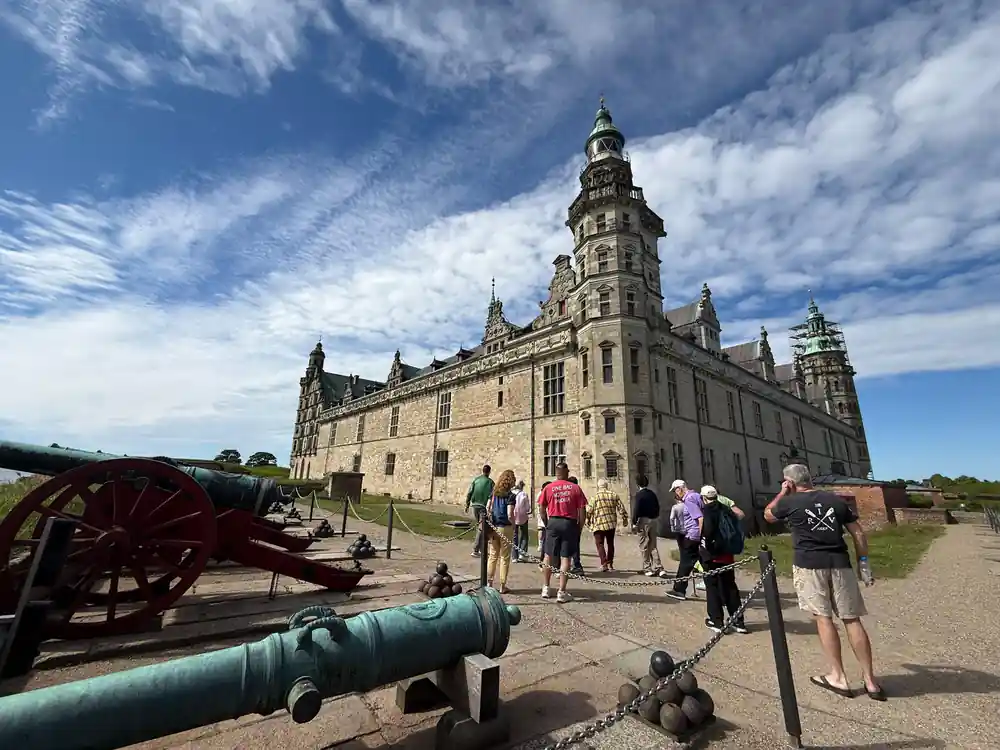
- The fortress's tower cannons were deliberately positioned to face the Swedish coast across the narrow strait, making it an imposing symbol of Danish naval power.
- Top choice Four sites in one day from US$213 Kronborg guidedYesTime at KronborgPart of an 8.5 hour dayOther Renaissance sitesFrederiksborg and Roskilde Check availability
- Easy-pace castles day from US$154 Kronborg guidedYesTime at KronborgPart of an 8.5 hour dayOther Renaissance sitesFrederiksborg See this tour
- Kronborg entry ticket from US$23 Kronborg guidedNo, on your ownTime at KronborgA ticket valid all dayOther Renaissance sitesNone See this tour
For centuries, it played a central role in Danish identity and in the history of Northern Europe from the 16th to the 18th centuries.
How to read the fortress
The fortress in stone
- Built where the Sound narrows, within cannon range of Sweden
- The Sound Dues were collected here for more than four hundred years
- Fire destroyed much of the castle in 1629
- Inscribed on the UNESCO World Heritage List in 2000
Visiting the history
- Adult admission 150 DKK, or 135 DKK booked online
- Both guided tours include Kronborg with a live guide
- The casemates run below the castle and need their own descent
- Open every day 10:00 to 17:00 from 28 March to 31 October
A Fortress Built to Command the Sound
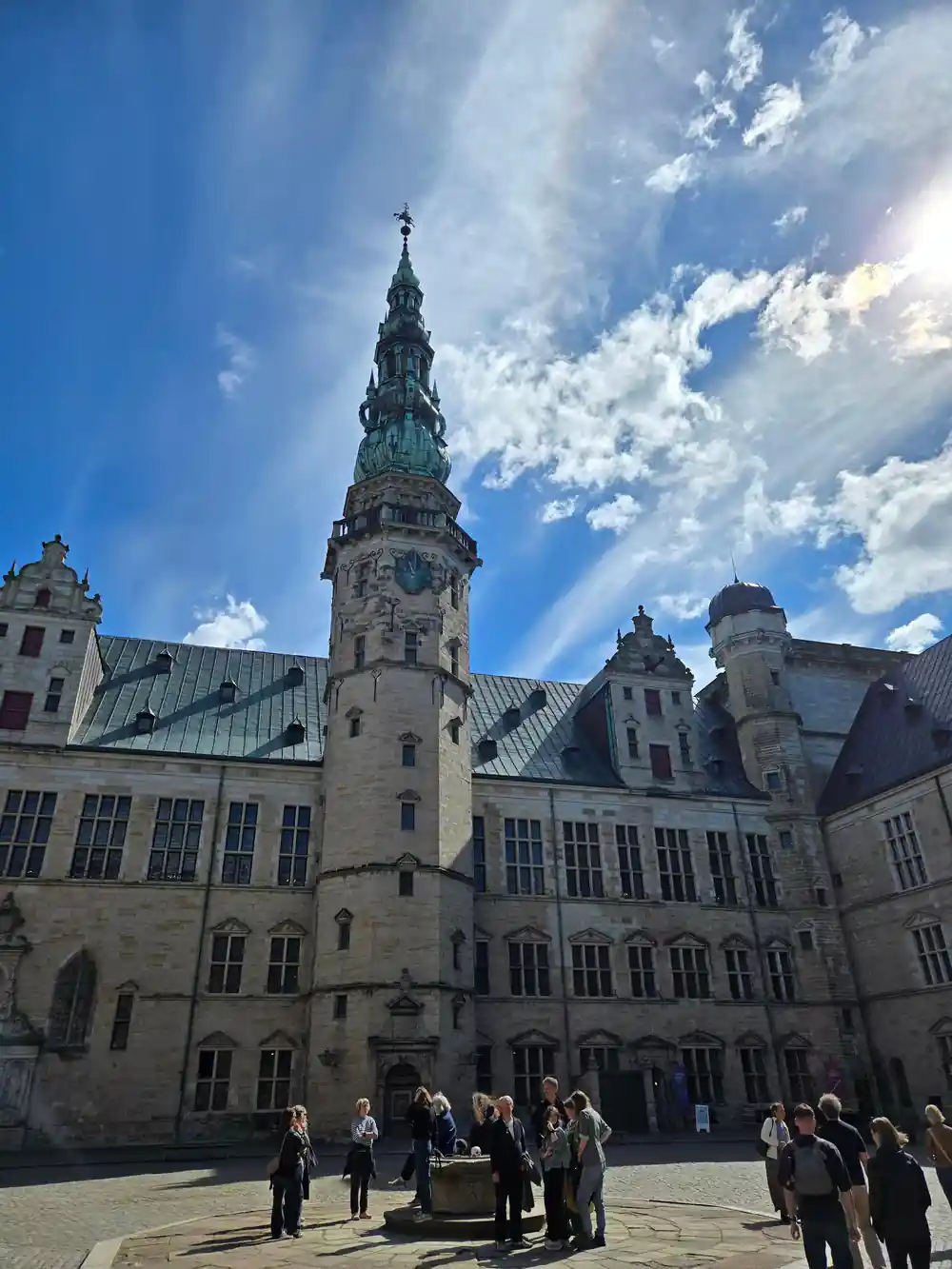
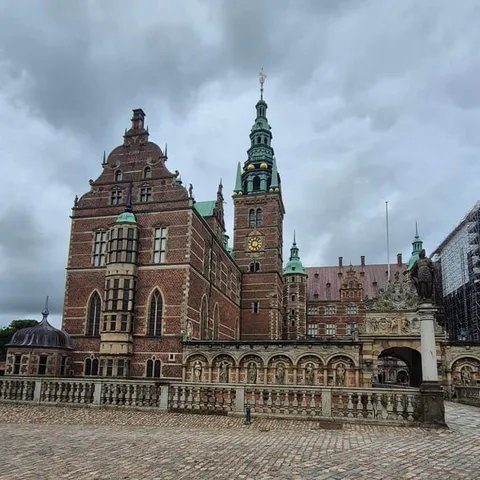
Kronborg Castle stands on the narrowest point of the Øresund Strait, where Denmark and Sweden face each other across just 4 kilometres of water. King Frederik II began rebuilding the medieval fortress in 1574, transforming it into a Renaissance palace designed to project power and collect wealth. The name Kronborg means 'crown castle' in Danish, a fitting title for a stronghold that would become one of Northern Europe's most formidable symbols of royal authority. This full-day tour from Copenhagen takes you to this UNESCO World Heritage site, letting you walk the same stone corridors where Danish kings once held court and commanded trade.
The castle's location was no accident. For centuries, all ships passing between the North Sea and the Baltic had to sail directly past its walls. Frederik II and his successors understood the strategic and financial potential of controlling this chokepoint. The fortress you see today reflects that ambition: thick defensive walls, multiple bastions, and artillery platforms all positioned to dominate the waterway below. During your 8 hour and 30 minute visit, you'll explore how Renaissance military architecture served both defensive and economic purposes, with every tower and gun emplacement part of a larger system of control.
The Sound Dues: How Tolls Built an Empire
From 1429 onwards, Danish kings levied the Sound Dues on every merchant ship passing through the strait. By the time Frederik II rebuilt Kronborg Castle, this toll had become the lifeblood of the Danish crown's finances. Ships carrying everything from grain and timber to luxury goods and fish had to stop, be inspected, and pay their tax. The revenue was so substantial that Denmark became one of Northern Europe's wealthiest kingdoms without possessing significant natural resources. Visitors on this tour see the toll house records and learn how a single geographic advantage generated enough wealth to fund the Renaissance reconstruction of the fortress itself.
The Sound Dues system created incentives for merchants to negotiate, bribe, or sometimes resist Danish authority. To make these negotiations more persuasive, Frederik II ensured that Kronborg Castle was visibly bristling with military power. The cannon towers faced directly toward the Swedish coast, making the Danish commitment to collecting tolls unmistakable. This economic model sustained Danish royal power for over 400 years, until the opening of the Kiel Canal in 1895 made it possible for ships to bypass the Sound entirely. The tour guides explain how this single toll system reshaped European trade routes and funded the cultural achievements you'll witness in the palace chambers.
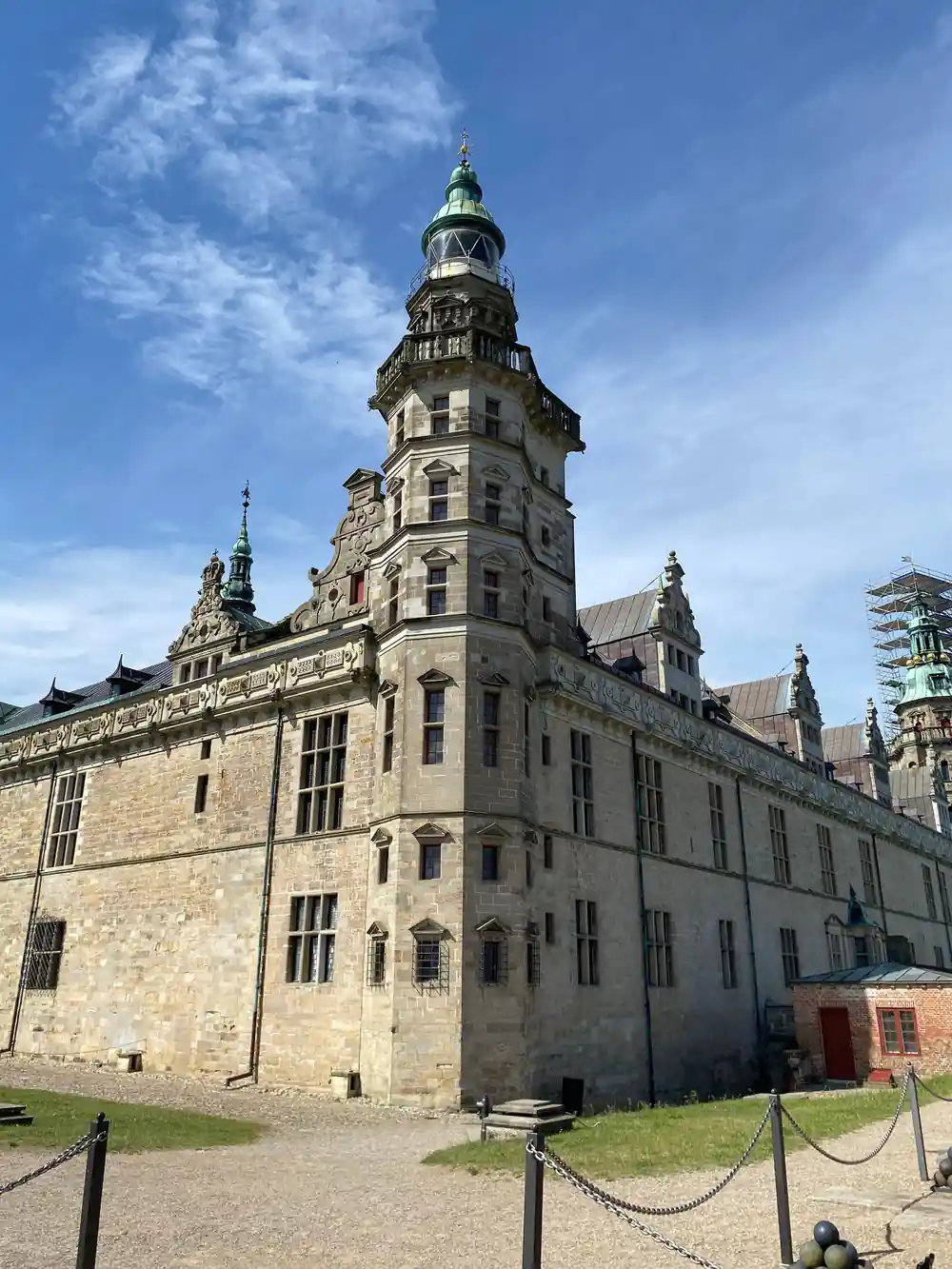
Cannon batteries command the narrow strait that made Kronborg a fortress and a fortune
Cannon Towers Facing the Swedish Shore
Walk along Kronborg Castle's outer walls and you immediately understand the fortress's primary concern: Sweden. Across the narrow Øresund Strait lies what was then Danish-Swedish territory, and relations between the two kingdoms oscillated between trade partnership and outright warfare. The cannon towers were positioned with surgical precision, their gun ports aligned to rake any Swedish naval approach or to bombard the fortress's most likely point of attack. The mathematics of Renaissance fortification were evident in every bastion angle and firing line. Your tour includes access to these gun emplacements, where you can stand where Danish gunners once stood and see exactly what they were defending against.
The 16th and 17th centuries saw repeated conflicts over the control of Scandinavia, and Kronborg Castle served as both symbol and sword in these disputes. The cannon tower installations were upgraded repeatedly as Swedish military capabilities evolved. Visitors learn which battles directly threatened the fortress, why certain towers were rebuilt after damage, and how the castle's garrison lived with the constant possibility of siege. The physical evidence of this tension remains in the stonework itself: reinforced walls, thickened bastions, and the pragmatic positioning of every defensive element. Standing on the ramparts, you gain respect for the engineers who designed a castle that had to be both impressive enough to impress merchants and strong enough to withstand determined assault.
Fire and Renaissance Stone: The 1629 Disaster
On 5 February 1629, fire swept through Kronborg Castle with catastrophic speed. The wooden interior structures burned with such intensity that the flames consumed most of the residential and administrative buildings. What survived were the Renaissance stone structures: the thick outer walls, the vaulted passages, the massive foundations that had been built to last centuries. The ballroom, which had been completed just decades earlier, suffered severe damage to its timber roof and decorative elements, but the stone skeleton endured. This fire became a turning point in the castle's history, forcing a complete reconstruction of the interior and fundamentally changing how the fortress was used.
The restoration after 1629 was slow and incomplete in some areas. Rather than rebuild the castle exactly as it had been, Danish rulers adapted it to new purposes. Much of the damaged residential space was never fully restored to its former luxury, and gradually the fortress transitioned toward military barracks and administrative functions. The tour takes you through areas where you can still see the blackened stones from the fire, the patchwork of repairs, and the fortress-within-a-fortress construction style that emerged afterward. Guides explain how this single event changed the trajectory of Kronborg Castle from a royal residence to a military installation, a transformation that left its mark on every subsequent century of the building's life. The Renaissance stonework that survived the flames remains one of Europe's finest examples of 16th-century architectural craftsmanship.
44 m
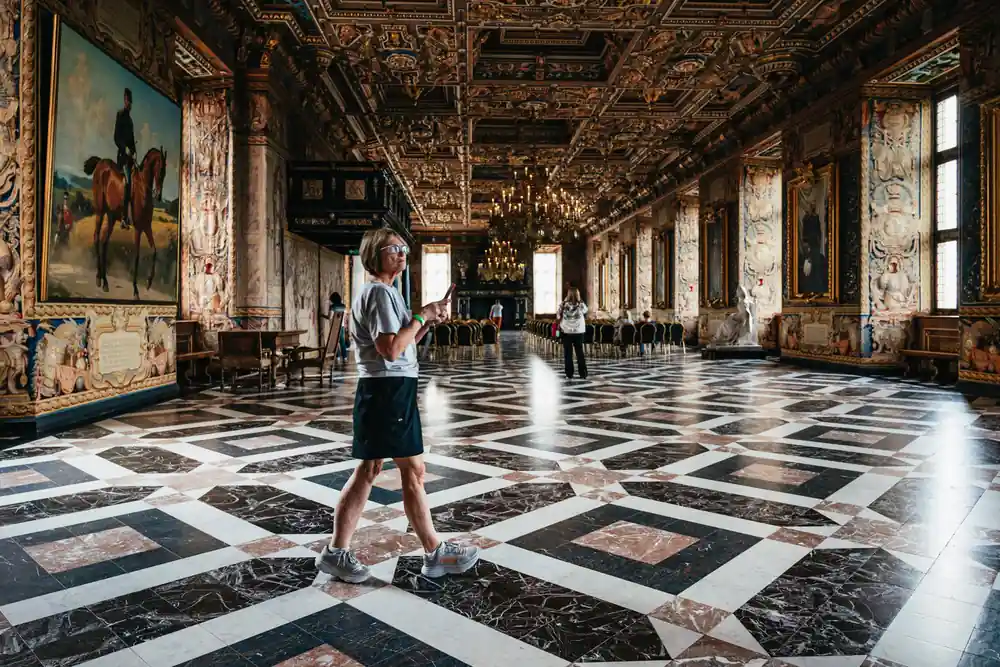
The castle's ballroom stretches 44 metres, making it the largest Renaissance hall in all of Northern Europe.
Northern Europe's Largest Ballroom
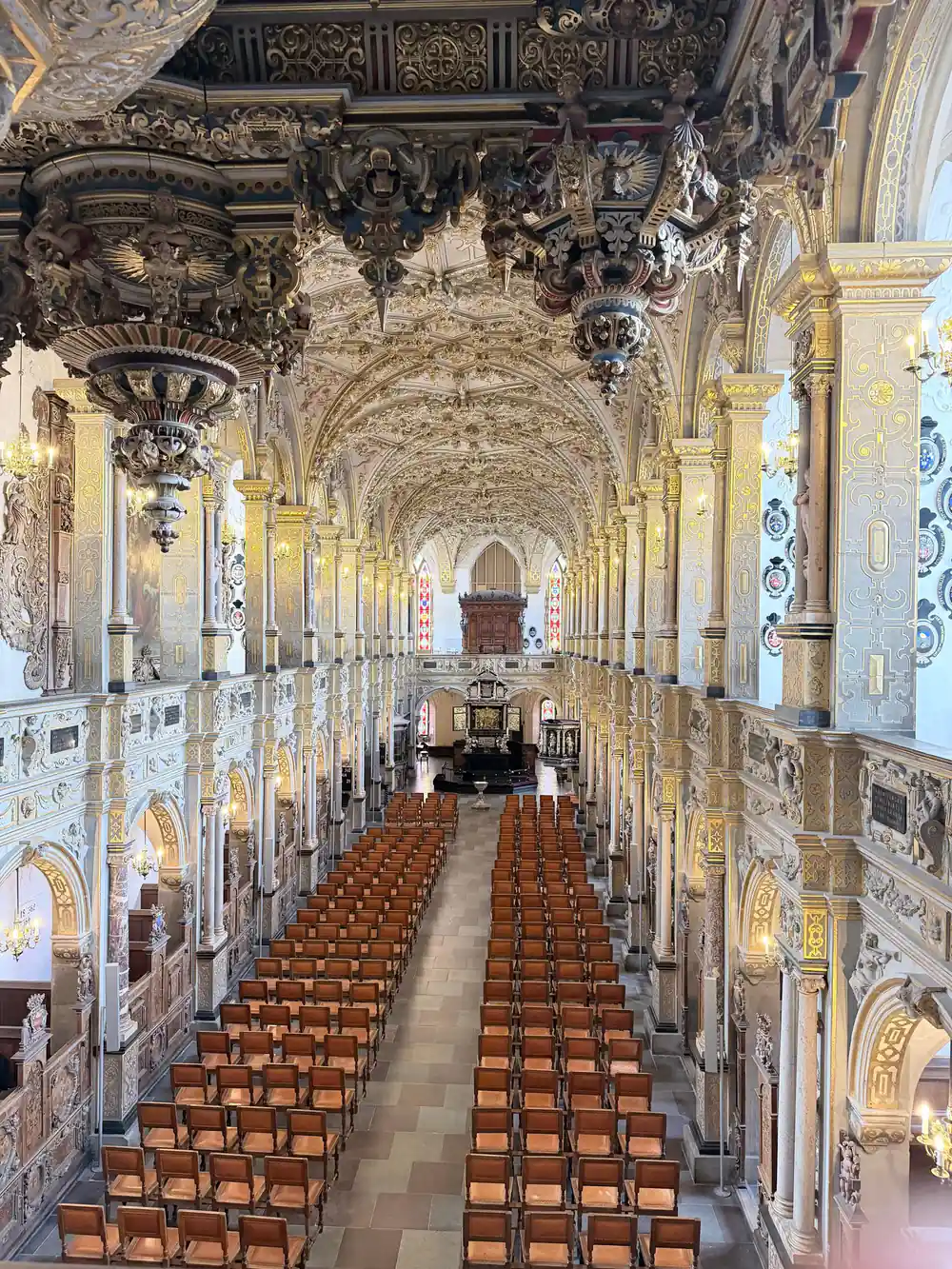
The Ballroom at Kronborg Castle occupies a space so vast that it claimed the title of Northern Europe's largest for its era. Measuring 62 metres long and constructed on an upper floor with a vaulted stone ceiling, it was designed as the ultimate statement of royal magnificence. Frederik II wanted visitors to Denmark to experience a space that rivalled anything in France, Italy, or the German principalities. The walls once featured elaborate tapestries, and the floor hosted dances that lasted through the night. The architectural challenge was immense: creating a ballroom of such scale without interior columns or support walls required exceptional Renaissance engineering knowledge and execution.
Today's visitors stand in this vast chamber and feel the ambition embedded in its proportions. The 1629 fire damaged the decorative elements and timber roof structure, but the essential stone framework survived. During your full-day tour, the guide explains the ballroom's purpose in Danish court life and the technical innovations that made its construction possible. The space also functioned as a banquet hall for state ceremonies, a venue where Denmark's wealth and power were put on display for visiting dignitaries. Walking its length gives a visceral sense of Renaissance ambition, where rulers competed for prestige through the monumentality of their architecture.
Barracks and Prison: Later Military Life
After the 1629 fire, Kronborg Castle gradually transformed from royal residence into a military installation. Throughout the 17th and 18th centuries, the fortress served primarily as barracks for Danish soldiers and as a garrison strongpoint defending the Øresund Strait. Rooms that once hosted royal banquets became sleeping quarters. The ballroom, though technically still available for state occasions, saw less frequent use as the court's attention shifted to newer palaces. The fortress also housed a military prison, where enemy soldiers, political prisoners, and common criminals were held under heavy guard. This shift from palace to fortress-barracks reflected both practical military needs and changing patterns of royal life in Scandinavia.
The barracks era left its own architectural signatures on Kronborg Castle. You'll see the modifications made to accommodate military efficiency: enlarged kitchens to feed hundreds of soldiers, reinforced guard rooms, and the partitioning of grand rooms into smaller sleeping spaces. The tour guides point out these transformations as you move through the castle, explaining how the same stone rooms that once impressed foreign ambassadors now served the mundane but essential functions of military administration. This long period of military use, stretching from the 1600s into the 20th century, ensured the fortress remained strategically important even as its role in Denmark's political and cultural life diminished. Understanding this transition helps visitors appreciate how Kronborg Castle survived centuries of change by remaining genuinely useful to whoever ruled Denmark.
Renaissance Architecture and UNESCO Recognition
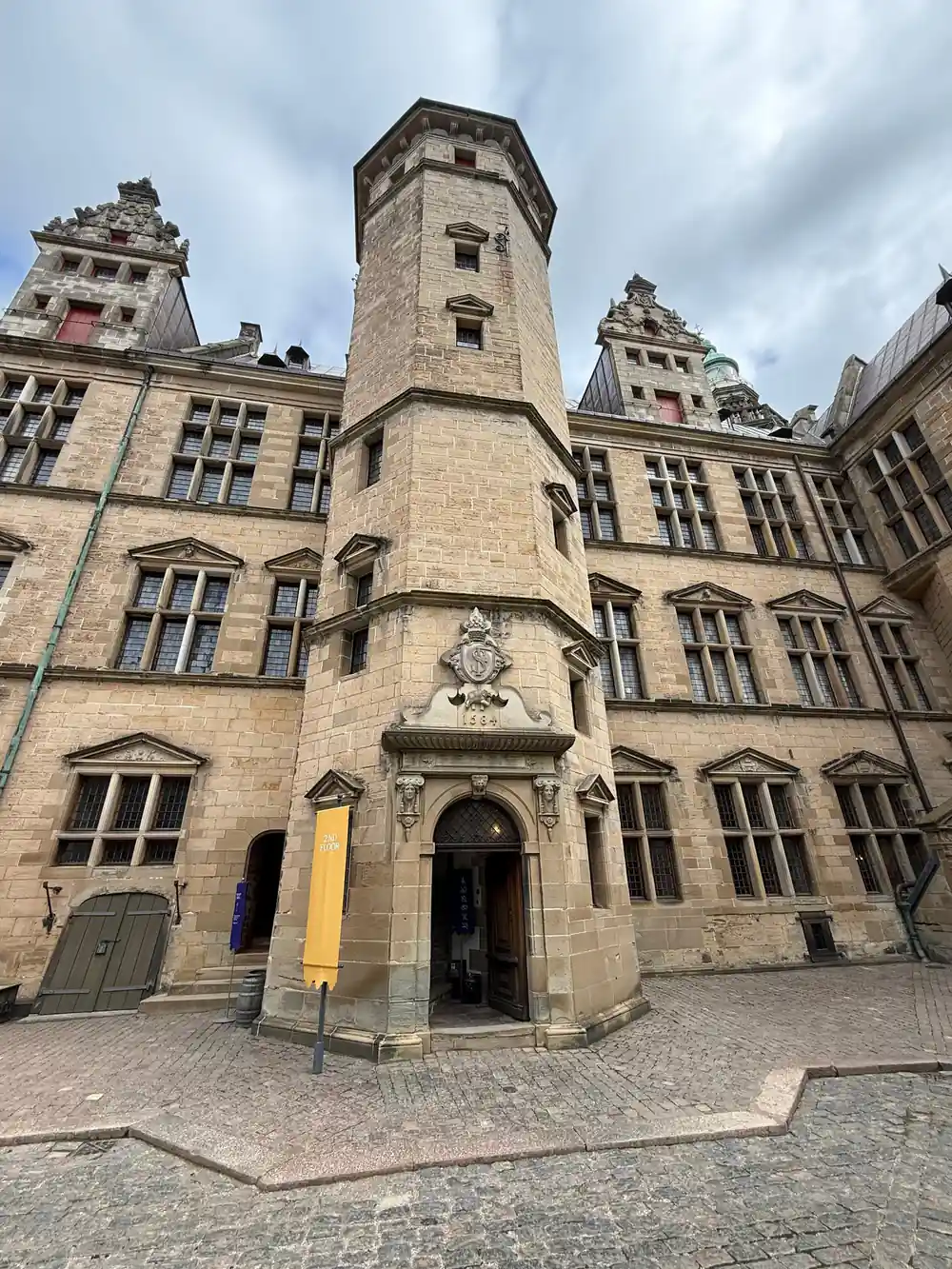
Kronborg Castle represents some of the finest Renaissance military architecture in Europe. Its design principles draw from Italian fortification theory while responding to the specific geographical and political circumstances of 16th-century Scandinavia. The castle's thick walls, angular bastions, and carefully calculated gun placements showcase the mathematical precision that Renaissance military engineers brought to fortress design. The interior spaces, where they survive, display the architectural sophistication of the era: vaulted ceilings, classical proportions, and decorative stonework that speaks to both power and refinement. In 2000, UNESCO recognized these qualities by designating Kronborg Castle a World Heritage Site, acknowledging its significance as a masterpiece of Renaissance architecture and its role in maritime history.
The UNESCO listing reflects international recognition that Kronborg Castle represents something larger than a single kingdom's fortification. The fortress embodies the Renaissance transition from medieval castle to early modern bastion, the economic systems that drove European trade, and the military innovations that shaped continental warfare. Standing in Kronborg's courtyards and chambers, you are surrounded by stone evidence of how Renaissance ideas about proportion, defence and prestige were physically realised in one of Europe's most strategic locations. The tour provides access to these spaces and the expertise needed to understand them. Whether you focus on the architecture, the military engineering or the economic history, Kronborg rewards careful attention.
Kronborg admission by ticket
Booking online saves 15 DKK on an adult ticket.[1]
The fortress alone, or the whole day
Every figure is a "from" price. Admission is the adult rate; under 18 enters free.
The fortress by date
Why it stands here
The narrowest crossing
The Sound between Denmark and Sweden is at its tightest here, within cannon range.
The Sound Dues
Ships passing paid a toll, collected here for more than four hundred years.
A Renaissance rebuild
Frederik II turned the fortress into a castle between 1574 and 1585.
Fire and recovery
The 1629 fire gutted much of it, and the rebuilding followed.
World Heritage
UNESCO inscribed Kronborg in 2000 for its place in Northern European history.
Stand where Danish kings stood. Book your castle day.
from US$213Reserve now & pay later